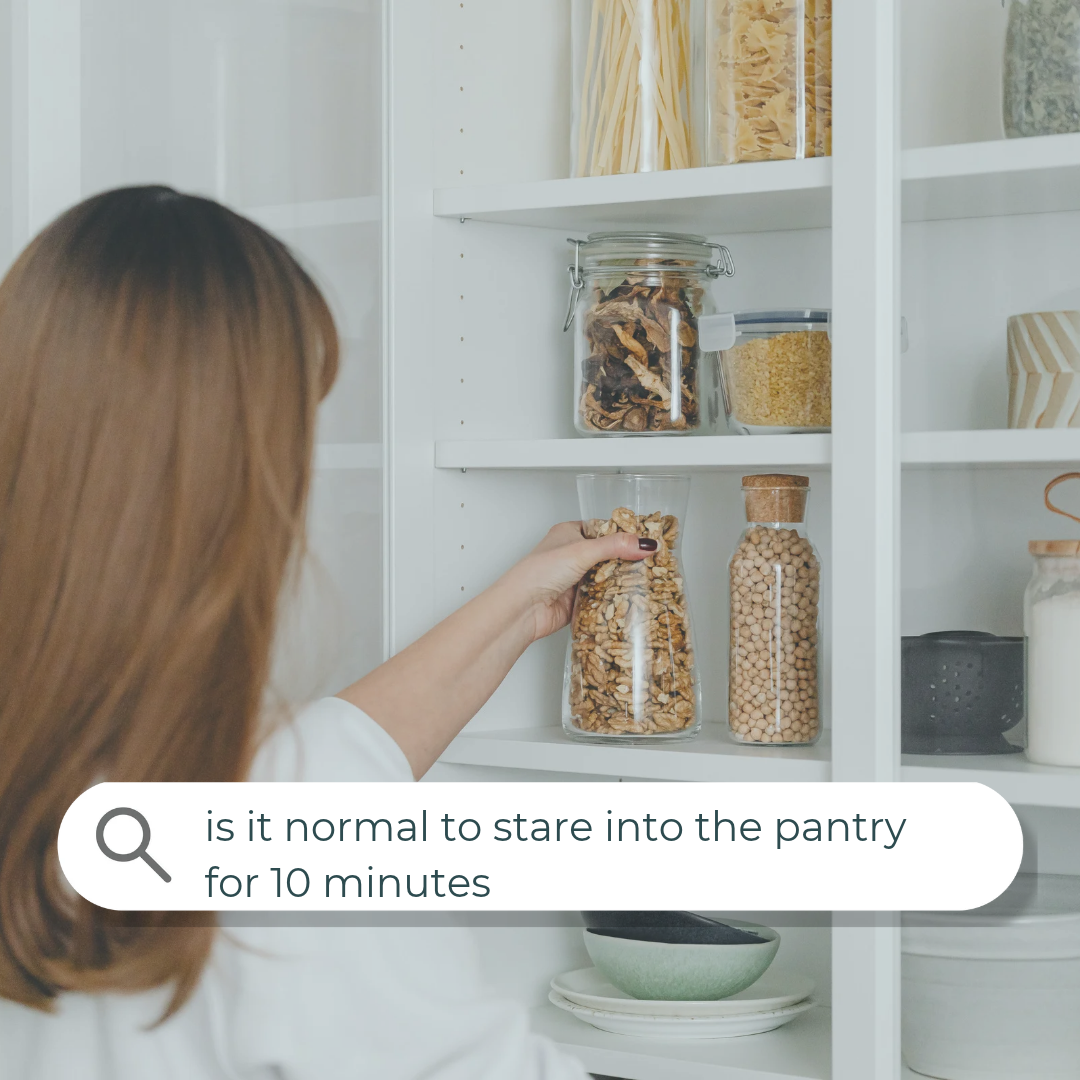
At 3:47 on a Tuesday afternoon, Rachel was a homeschool mom in the grip of decision fatigue, although she didn’t understand it yet.
Her phone buzzed. At the kitchen table, her nine-year-old son had been stuck on the same math problem for twenty minutes. Meanwhile, her five-year-old daughter was asking, for the third time, what was for snack. Her reading curriculum lay half-open on the counter because Rachel still hadn’t decided whether to switch programs. And the text was from her homeschool co-op coordinator: Could you lead the art class this spring? Need to know by tonight!
Rachel typed, “Sure, happy to!” and hit send before she had even finished reading.
Then she walked into the pantry, stared at the shelves, and couldn’t decide what to make. In fact, she stood there so long that her daughter came looking for her.
After the kids were officially in bed, she sat down at the kitchen table to plan next week’s homeschool. She opened her planner and picked up a pen. Twenty minutes later, she was reorganizing the junk drawer. When that was done, and she answered a request from one of the kids’ bedrooms again, she sank onto the couch and started scrolling her phone. It didn’t bring her any joy, of course, and she wasn’t really reading. Instead, it felt like her brain had switched into energy-saving mode, the way a computer dims its screen and slows down when the battery is almost gone.
That night she lay awake, running through everything she hadn’t done. Later, when she told me about it, she said, “Welcome back to my chaos! There’s too much to do.”
However, when we slowed down and looked at her day, the problem wasn’t just how much she had to do. It was how much she had to decide. By bedtime, she had made hundreds of decisions. Most were small, many were emotional, and none had any structure to support them. She wasn’t short on ability to make decisions; however, she had simply run out of decision-making capacity.
Overwhelm or Decision Fatigue? What Every Homeschool Mom Should Know
Overwhelm is the feeling. Decision fatigue is often a cause underneath it, one of 8 common causes.
Overwhelm says, there’s too much. Decision fatigue says, I can’t choose one more thing today. From the inside, they feel almost identical. That’s why so many moms try to fix overwhelm with to-do lists, new planners, and earlier wake times, and then wonder why nothing changes.
Here’s the key difference: if decision fatigue is behind your overwhelm as a homeschool mom, doing more won’t help. Deciding less will.
What Are the Symptoms of Decision Fatigue in a Homeschool Mom?
In a homeschool mom, decision fatigue rarely looks like obvious burnout. Instead, it shows up in more confusing ways. Watch for these:
You make emotion-based decisions instead of value-based ones.
When you’re depleted, you stop asking, What do I actually want here? Instead, you start asking what will make this uncomfortable feeling stop? Consequently, you say yes to things you don’t have capacity for, avoid conversations you need to have, or make impulsive choices just to get the decision over with. Rachel’s instant yes to the co-op art class was exactly this.
If you often look to others to tell you what’s okay, here’s how to make confident homeschool decisions without seeking permission.
You need external pressure to get started.
Maybe you only take action when something is urgent, when a deadline looms, or when someone is waiting on you. If so, your internal decision-making engine may not have any get-up-and-go. Your own intentions no longer feel like enough fuel. Rachel admitted that she only planned lessons the night before, when she had no other choice. (fyi some moms eventually don’t plan at all).
Simple tasks feel disproportionately hard.
When sorting a pile of old homeschool materials feels as difficult as a major life decision, your brain is sending you a clear signal. This is what cognitive depletion actually looks like. For Rachel, it was freezing in the pantry over something as ordinary as snacktime.
You default to what you’ve always done, even when it isn’t working.
Change requires decision-making energy. So when that energy is spent, you stay in familiar patterns, even frustrating ones, because the alternative asks more than you have to give. Rachel kept using a reading program she knew wasn’t working for her son because switching felt like too much.
Often, underneath that stuck feeling is a bigger question: am I homeschooling my child the right way?
You procrastinate on decisions that should be simple.
The email sits in drafts. Your curriculum stays in the box. That organizing project lies half-finished on the bedroom floor. It’s not because you don’t care. Rather, your brain simply can’t marshal the resources to finish. Rachel’s half-open reading curriculum had been waiting on the counter for weeks.
If you recognized yourself in two or more of these, decision fatigue may be shaping more of your days as a homeschool mom than you realized.
Knowing you have decision fatigue is a start. Knowing where it comes from is what helps you change it. For Rachel, the biggest drains turned out to be guilt-driven yeses and a house full of unmade decisions, not the teaching itself. Your mix might look completely different.
That’s why I created a free quiz, the Overwhelmed Homeschool Mom’s Wheel of Personal Growth. It helps you see which areas of your life are asking the most of you right now, so you know where to begin.
Why Does Overwhelm Hit Hardest in the Afternoon?
Your decision-making capacity is a limited daily resource. By mid-afternoon, you’ve spent most of it. For a homeschool mom, decision fatigue tends to peak somewhere between lunch and dinner.
That’s why Rachel said yes to the co-op. It wasn’t what she wanted. It was simply the fastest way to make one more decision disappear. Unfortunately, choices made from depletion often create more work later, which then feeds tomorrow’s overwhelm.
The junk drawer and the scrolling weren’t laziness either. When your brain is in energy-saving mode, it reaches for tasks that feel productive but require no real choices, or for no task at all. It’s protecting what little battery you have left.
Sometimes the season adds to the drain, too. Shorter, darker days can make afternoons feel even heavier. If your energy dips every fall and winter, read about homeschool fatigue and the winter blues, along with 13 ways to prevent S.A.D. as a homeschool mom.
The good news is that breaking this cycle doesn’t take more willpower. Instead, it takes a few structures that make decisions for you before you’re too tired to make them well.
How to Reduce Decision Fatigue as a Homeschool Mom
The goal isn’t to make fewer decisions. Rather, it’s to spend your decision-making energy on what matters most, and to automate, batch, or release everything else.
Automate the low-stakes recurring stuff.
Keep the same basic breakfast rhythm, the same laundry day, and the same general daily structure. When small recurring decisions are already made, your brain doesn’t have to work for them. After all, decision fatigue thrives in the absence of routine. Consequently, even an imperfect routine eases decision fatigue for a homeschool mom far more than no routine at all. Rachel created a two-week rotating dinner menu, and her 4 pm pantry freeze disappeared within a week.
Do your hardest thinking early.
Your decision-making capacity is highest in the morning, before the day has drained it. So that’s the time to plan, to have the hard conversation, to sort out complicated logistics, and to make the call you’ve been putting off. The afternoon, by contrast, is not the time for important choices. Give yourself permission to defer them until morning without calling it procrastination.
Batch similar decisions together.
Plan the week’s meals on Sunday. Next, choose the week’s curriculum focus on Monday morning. In other words, make decisions in clusters rather than scattering them through the day as they arise. Switching between different types of thinking is cognitively expensive, and batching dramatically reduces that cost.
Create a not-right-now category.
You don’t need to make every decision today. When something surfaces that requires real thought, write it down along with a specific time you’ll address it. This tells your brain the decision is captured and won’t get lost. As a result, it drops off the mental tab you’ve been quietly carrying through the rest of your day.
Stop deciding from guilt.
This is the hardest one, and also the most important. For a homeschool mom, the most draining source of decision fatigue often isn’t logistics at all. It’s emotion. The hardest decisions ask: Should I say yes because I want to, or because I feel I should? Should I take this on because it fits, or because I’m afraid of disappointing someone?
Learning to notice that difference is one of the most powerful shifts you can make for your mental energy. After the co-op yes, Rachel started using one sentence whenever a request arrived after lunch: “Let me check my calendar and get back to you tomorrow morning.” Then, the next morning, she asked herself one simple question before answering: Am I choosing this, or am I avoiding the discomfort of saying no? That question alone changed how she spent her time and energy.

How to Get Unstuck When You’re Already Overwhelmed
Routines and rules protect your energy going forward. However, if you’re already in the fog, you need a way out first. These are the five steps Rachel used.
1. Empty the mental tab onto paper.
Overwhelm grows when decisions live only in your head. For a homeschool mom, decision fatigue feeds on those invisible, unwritten loops. So set a timer for ten minutes and write down every open decision you’re carrying: the curriculum question, the birthday party RSVP, the dentist appointment, the conversation you’ve been avoiding. Don’t organize it yet; just get it out. Rachel’s list had forty-three items. Seeing it on paper was the first time she understood why she felt so heavy.
2. Sort the list into three piles: Decide, Default, Drop.
Decide means it truly needs your thoughtful attention. Default means it could become a routine or standing rule like the ones above. Drop means it doesn’t actually need to happen, or doesn’t need to be yours. Most moms find the Decide pile is far smaller than they expected. Rachel’s forty-three items became eleven real decisions.
3. Shrink big decisions down to the next smallest step.
Some decisions feel impossible because they’re really five decisions wearing a trench coat. For example, “Should we switch reading curricula?” contains what isn’t working, what are the options, what can we afford, when would we switch, and how will my son feel. Pick only the first one. Rachel spent fifteen minutes one morning writing down what wasn’t working with the current program. That was all. Two days later, the rest of the decision felt manageable.
For decisions like this one, the Right-for-This-Child Framework gives you a simple structure to return to. It walks you through each choice using three lenses: your values, your child’s needs, and your own emotional response, so you can decide from clarity rather than fear, guilt, or comparison.
4. Close one tab a day.
Pick one item from your Decide pile each morning and finish it completely. Not three. Just one. Overwhelm lifts through small, visible completions far more than through ambitious plans. By the end of the month, Rachel had closed more open decisions than in the previous six months combined.
5. End the day with a shutdown ritual.
Before bed, spend five minutes adding anything new to your not-right-now list and choosing tomorrow’s one decision. This tells your brain the loop is captured, so it can stop rehearsing it at midnight. Rachel said this was the step that gave her back her sleep.

Does Clutter Make Decision Fatigue Worse for a Homeschool Mom?
Yes, significantly, and in a way most people haven’t considered. In fact, for a homeschool mom, clutter is one of the biggest hidden drivers of decision fatigue.
Every item in your home without a clear designated place is an unfinished decision. Likewise, every pile of unsorted homeschool materials is a decision you started and then set down. Visual clutter also keeps your brain in a low-level state of alertness. As a result, it quietly spends cognitive resources on processing your surroundings, resources you need for everything else.
This is why decluttering can feel so disproportionately freeing. It isn’t just about how a room looks. You are literally closing mental tabs.
Remember Rachel’s reading curriculum, lying half-open on the kitchen counter? Every time she walked past it, it silently asked the same question: switch or stay? So did the stack of workbooks by the back door and the bin of craft supplies she’d meant to sort since fall. None of them demanded an answer. Still, each one took a small bite of her energy every day.
Looking back, it makes sense that she reorganized the junk drawer the night she tried to plan. Part of her knew the clutter was weighing on her. She just chose the one pile that required no real decisions.
When she finally sorted one bin, just one, she described the relief as immediate and almost physical.
Start small. One bag, one surface, or one box is enough. The relief you feel is real, and it’s worth building on.
What If I Already Feel Too Overwhelmed to Start?
Then pick the smallest possible starting point: step one, ten minutes, and a piece of paper.
Decision fatigue won’t lift all at once for any homeschool mom, and it doesn’t need to. You don’t have to fix your whole system to feel relief. You just have to take one decision out of your head and put it somewhere you can see it. From there, relief builds on itself, and so does momentum.
And if you’d rather not figure it out on your own, the Reimagine Your Homeschool Mini-Course was made for exactly this moment. It’s a $17 starting point for the mom who isn’t ready to book a call but is very ready to stop feeling this way. Inside, you’ll find strategies for big emotions, self-doubt, and building routines that actually serve your family. You can go at your own pace, in your own home, tonight if you want to.

A Final Word on Decision Fatigue and the Homeschool Mom
A few months after that Tuesday afternoon, Rachel told me something. “I thought I needed to become a more organized person,” she said. “I just needed to stop deciding everything from scratch.”
That’s the shift. You make hundreds of decisions a day inside a role with very little external structure, very little acknowledgment, and very few natural breaks. So the exhaustion you feel is proportionate to the load you carry. Decision fatigue isn’t proof that you’re failing as a homeschool mom, or that you aren’t cut out for this.
You can build that structure, and overcome the “decision fatigue” overwhelm.
Ready for Support with Decision Fatigue as a Homeschool Mom?
If you’d like help seeing which decisions truly belong to you and which ones you can finally set down, let’s talk it through together. In a free Aligned Homeschool Reset Session, we’ll unpack what’s driving your overwhelm and map out a clear, gentle next step.
I help homeschool moms trust themselves, edit expectations, and make intentional choices that create a more confident, connected, and present homeschool life.

Subscribe to the Confident Homeschool Mom podcast
