
Podcast: Play in new window | Download
Prefer to listen? This is Episode 3 of the Confident Homeschool Mom podcast.
Has your kiddo ever caught you hiding in the closet with a box of Oreo cookies? Or maybe you’ve lost your temper with your kids, the very thing you told yourself you absolutely shouldn’t do. Homeschool mom anger is far more common than we admit, and it rarely means you’re failing.
The emotional atmosphere of your home is a curriculum in and of itself. In fact, emotional training is the unspoken curriculum we’re all teaching, and wish we could do perfectly. In this episode, I want to bring YOUR emotions into focus instead, because you are the most important curriculum in your homeschool.
In Episode 2, we started with R: How to Create a Homeschool Vision Statement. In this episode, we’re on E, establishing emotional regulation. These two are part of the Reimagine framework I use in coaching every week. To catch the full framework, watch the Reimagine Masterclass here.
Before you read on: if you want to name what’s actually driving your overwhelm, start with the free Wheel of Personal Growth.

Everything You Do for Yourself, You’re Doing for Your Kids Too
I want to encourage you right off the top. As soon as we start talking about big emotions, including homeschool mom anger, guilt can show up. And understandably, because we are imperfect human beings. Many of us were never taught any emotional regulation, yet our culture suggests we expertly handle our kids’ big emotions.
So here’s the encouragement: everything you do for yourself, you’re doing for your kiddo too.
I once interviewed Sarah Susanka, author of The Not So Big Life, on the podcast. The day before we spoke, a homeschool friend told me she thought she’d seriously screwed up her kids, maybe even done permanent damage. So I pitched that thought to Sarah, and she declared, you can’t!
As soon as you move toward your own personal growth and shift how you’re showing up, thinking, and engaging, you naturally invite your kids to shift too.
Of course, that doesn’t mean they will. They might choose not to. But most kids want that. Most kids want to know their parent is leading, and that she cares deeply about walking in a direction that works for her and for them. That’s how you grow closer and create a safe, nurturing space together.
The Music of Your Home
Is there a piece of music that feels like it almost speaks the language of your soul? For me, on many mornings, it’s the Peer Gynt Suite. I put it on as I wake up and make my cappuccino in the AeroPress. On the mornings I choose this piece, it feels like what I feel inside.
Now picture the opposite. You walk into a really loud space, with music blaring, and you can’t quite hear the person in front of you. You’re lip-reading, at best. Meanwhile, you’d rather be sitting over coffee, really hearing someone’s story, or feeling like they really heard yours.
Or try this: type “singing bowls, ten-minute meditation” into YouTube. Just listen first. Notice how it draws your energy in. Then take a look at the thumbnail. A man in an interesting outfit rubs what looks like a drum mallet around ceramic bowls, with a cat in the middle on a cushion. My husband refrained from calling it weird, howeva, when you’re married for nearly three decades, you read their facial expressions well. I thought, what a peaceful life that appears to be.
Music can take us away. It can bring us to a more regulated, peaceful, and satisfied space. So when we hit the right emotional note within ourselves, we feel most alive, centered, and present. Homeschool mom anger, in other words, is often a sign that the note is off, not that you are.
What Homeschool Mom Anger Can Look Like
Then I consider the alternative. Here’s a mish-mash of other moms’ lives on a Monday morning.
You’re trying to get out the door to your homeschool co-op, where your kids and your friend’s kids homeschool together. And you love these people. But your kids haven’t got their things together, even though you pre-warned them twice yesterday and twice today. Then, twenty minutes late, you discover a tap left on in the basement. The bathroom floor is flooded. You don’t have time to clean it up, but you can’t possibly afford a new carpet installation.
So you call your friend and say you’re sorry, you can’t come yet. And the whole week starts shifting toward cacophony and frustration. It’s not even Monday lunch yet!
What kind of music would you call that? Music is regulating. But some days, even many days, the energy in our homes is dysregulating.
The Woman Living Inside That Monday
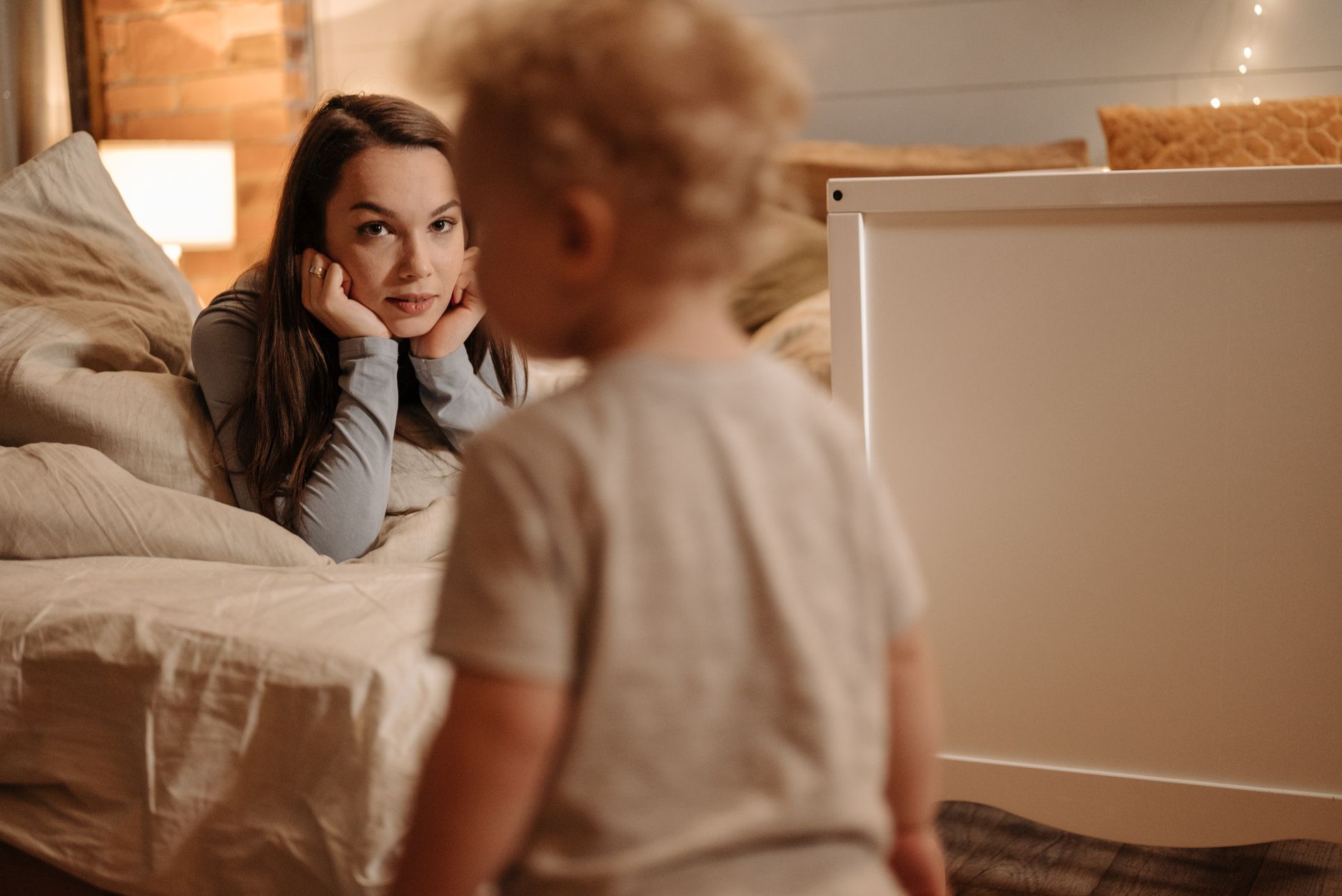
She loses it more often than she’d like to admit. She’s frequently irritable, and she feels touched out and talked out, with too many questions to answer at once. Meanwhile, her kiddos aren’t emotionally regulated either. She doesn’t tell her co-op friends she’s hiding in the closet with a box of Oreos. Or that by the end of that day, she’s googling: “Burned out homeschool mom — what do I do?”
She can’t disappoint anyone. But she also wants to keep doing this, because she knows it’s an ideal opportunity for her kids. And she resents it, but then feels guilty for feeling resentful toward the people she’s doing it for.
If that list sounds like you, I’ve also written about 6 challenges every struggling homeschool mom faces — and how to transform them.

My Own Homeschool Mom Anger Story
I shared in my book, Homeschool Mama Self-Care: Nurturing the Nurturer, that my big emotions were one of the greatest challenges in my homeschool life. Surprisingly, it wasn’t figuring out how to teach algebra, because I got someone to teach my kids that when that came up.
I was losing it way too often. Anger was my ever-present companion. My co-teacher, even. And my kids knew her too well.
The Monday I Heard My Own Voice
One Monday, I woke up late to cold coffee on my bedside table and chaos already happening in the kitchen. The sweet older girls were trying to help the younger kids get breakfast. It was a messy morning, with rising tension amongst most of us. I tried to pull everyone together, but everything felt loud and jagged.
Then, half an hour later, we sat down in the family room for our morning basket and a read-aloud. A fight broke out between two kids over who would sit next to me. And then I heard a sharp voice, way too loud and intense, filling the room, and realized it was mine.
That morning, I was the mom in this post. Touched out and talked out, and metaphorically hiding in the closet with a box of Oreos, because I wasn’t telling myself the truth. That Monday was homeschool mom anger from the inside.
So I left to my bedroom and slumped on the floor at the end of my bed. I texted a friend, and she told me to watch a YouTube video. It turned out to be one of Brené Brown’s first TEDx talks. I can’t tell you its message with full clarity today, because it was a very long time ago. Still, it showed me that I was trying to be endlessly available to everyone else while being completely unavailable to myself.
I didn’t know who I was, what I needed, or what I wanted. But maybe I had to figure out how to be with myself, so I could be properly with my kids.
Why Homeschool Mom Anger Is the Tip of the Iceberg
Here’s what I know now. Most of us were never taught to feel, listen to, and process our feelings. Many of us never had that modeled. I certainly didn’t. Instead, I tried to stuff my anger, because it wasn’t convenient and because anger scared me since childhood. I’d think: this surely isn’t good for me, and it’s surely worse for my kids.
Anger is just the tip of the iceberg, with a whole mass of feelings hidden underneath the surface. That massive chunk beneath the surface causes real damage. And that unseen mass is almost impossible to see on our own.
That’s also why more structure, better systems, and a new planner don’t touch homeschool mom anger. Those things aren’t wrong inherently, but they just don’t reach what’s underneath.
One Small Thing That Changed My Mornings
The first thing that started me on a different path with homeschool mom anger was remarkably simple. I attended a Dr. Daniel Amen webinar. Then I set an alarm on my iPod for 11 a.m., right when the Monday meltdowns typically hit. Hand on my heart, a few simple questions, just for me.
It felt small, and it was, but over time, it changed me.
Later, in the early days of coaching, one of my clients told me she was routinely practicing this long after we worked together. She was tired of losing her marbles with her kids. So she set a reminder on her phone.
Once or twice a day, she’d pause, put her hand on her heart, and check in with herself:
- How are you doing?
- Are you feeling okay?
- What do you need?
After a few weeks of doing that consistently, her kids began doing it with her, without being asked. They’d hear the reminder, and they’d stop and breathe alongside her.
She wasn’t teaching them emotional regulation. (She wasn’t pinning emotional regulation emoji faces onto her fridge, although you can totally do that, too. I have one on mine still!) They were simply noticing what she was doing. She modeled it, and they absorbed it.
What Is the Music of Your Home Right Now?
Here’s a question to carry with you: what is the music of your home right now? Is it regulating, or dysregulating?
No pressure to have an answer. It’s just worth noticing, including where homeschool mom anger shows up in that music.
Next Step: Module 2 of the Reimagine Mini-Course
If you want to go deeper into homeschool mom anger, maybe because there’s something you haven’t wanted to acknowledge out loud, or this post feels pretty convicting, or you really do need to cut down on your Oreo consumption, well, girlfriend, this is the work. Module 2 of the Reimagine Your Homeschool mini-course, Handling Big Emotions (Yours & Theirs), walks you through what to do in the moment and what to do with what’s underneath. Find it below.

Quick Answers About Homeschool Mom Anger
Most of us were never taught to feel, listen to, and process our feelings. Anger is often the tip of an iceberg, with a mass of feelings hidden underneath. Trying harder doesn’t reach what you can’t see.
Homeschool mom anger is common. When you’re touched out, talked out, and asked too many questions at once, losing it more than you’d like to admit is a sign of an overly heavy load, and possibly of big emotions that were never acknowledged or processed.
Often, they’re invited to. As you move toward your own growth, your kids are naturally invited to shift too. They might choose not to, but most kids want to see their parent leading.
You already know the answer. NO, but you can learn better how to acknowledge it and process it.
Ready to Chip Away at Your Homeschool Mom Anger?
You can’t overcome all your internal challenges in one fell swoop. You can’t dismantle the whole iceberg underneath the water. But you can begin chipping away at it.
You are not just the educator, the planner, the one who holds it all together. You are a whole person with needs, desires, and a life worth nurturing.
People Also Ask:
- How the Mother Wound Affects Homeschool Moms—and How to Break Free
- Homeschool Mama Big Emotions Toolbox Part 3
- Understanding the Enneagram for Homeschoolers
- How to Deal with Anger in Your Homeschool with Judy Arnall
- Unshackle Homeschool Mom Frustration: Unleash for Growth in 5 Ways
- How to Unschool Music Training by Getting Out of the Way
- How to Encourage Happiness in Our Homeschools?
Subscribe to the Confident Homeschool Mom podcast
