
Podcast: Play in new window | Download
Creating sustainable daily rhythms that serve your family’s unique needs without overwhelming your life and homeschool routines that support you!
The most successful homeschool routines that support you are built backward—they start with what the mom needs, not what the curriculum demands. And that’s exactly what we’re talking about today.
I know that might sound counterintuitive, or possibly self-serving. But stick with me, because I’m going to show you why putting yourself first is actually the secret to a homeschool that thrives.
This topic keeps coming up in conversations with homeschooling families, and I understand why.
We’re all searching for that sweet spot between structure and sanity, between productivity and peace. The good news? It’s entirely possible to create routines that make homeschooling simpler, not more complicated.
Why Most Homeschool Routines Fail (And How to Fix It)
Here’s what I’ve learned after years of homeschooling: most routines fail because they’re built to impress others rather than serve your family. We create these elaborate schedules that look amazing on paper but leave us feeling defeated by 10 AM.
The secret to routines that actually work? They need to support YOU first. When you’re centered, energized, and functioning well, everything else flows more smoothly. Your children pick up on your energy, your teaching becomes more natural, and your home becomes a place of learning rather than stress.
The Foundation: Understanding What YOU Actually Need
Before we dive into creating routines, let’s get real about what you actually need to thrive. If we were sitting together right now, I’d ask you these questions:
- What time of day do you feel most energetic?
- What drains your energy fastest?
- And what activities make you feel most like yourself?
- When do you feel most patient with your children?
- What does a good day look like for you personally?
These aren’t selfish questions—they’re essential ones. When you understand your own rhythms and needs, you can build routines that work with your natural flow instead of against it.

Simplifying the Routine vs. Schedule Debate
Let’s settle this once and for all: you need routines, not rigid schedules.
Schedules are about specific times and detailed to-do lists. “At 8:30 we do math, at 9:15 we do language arts…”
Routines are about consistent patterns that create rhythm and predictability without making you a slave to the clock.
Think of routines as the gentle framework that holds your day together. They provide structure without suffocating spontaneity, organization without overwhelming pressure.
When you focus on routines over schedules, you give yourself permission to be human while still maintaining purposeful direction. And that flexibility? That’s what makes it sustainable.
Building Homeschool Routines that Support Your Personal Morning
If we’re building backward—starting with what YOU need—we have to start with your morning routine. This is the cornerstone of everything else.
I know what you’re thinking: “I have a baby who doesn’t sleep. I have a toddler who wakes up at 5 AM ready to destroy the house. Finding morning time for myself feels literally impossible.”
I get it. But even fifteen minutes of intentional morning time can transform your entire day.
This isn’t about waking up at 5 AM to run a marathon and meditate for an hour. It’s about creating a small pocket of time where you connect with yourself before the day’s demands take over. Maybe it’s:
- Journaling with your coffee
- Stretching in your bedroom
- Simply sitting quietly and setting an intention for the day
The key is making it sustainable and making it about YOU first. Choose something that feels nourishing—not like another task to check off your list.
This is your foundation. Everything else gets built on top of this. So protect it, even if it’s just ten minutes.

Including Your Children Without Losing Yourself
Once you have your foundation—that personal morning time—then you can add the next layer: family routines.
One of the beautiful aspects of homeschooling is that you can include your children in routines that benefit everyone. Starting the day with a few minutes of calm breathing, gratitude sharing, or peaceful reading sets a tone of mindfulness that carries through your homeschool day.
But here’s the important part: these family routines should complement, not replace, your personal routine.
You need both the connection with your children AND the connection with yourself. Both matter. Both are essential.
See how we’re building this? Personal foundation first, then family connection on top of that. Not the other way around.
The Essential Elements: What YOU Need Throughout the Day
After years of trial and error, I’ve identified a few elements that consistently support the mom first, which then makes everything else flow better. These are the non-negotiables that should be built into your routine because they serve YOU.
Outdoor Time as Medicine: Homeschool Routines that Support Everyone
Nature isn’t just nice to have—it’s essential medicine. And honestly? You probably need it even more than your kids do.
Whether it’s eating breakfast on the porch, taking a learning walk, or simply stepping outside for five minutes when tensions rise, outdoor time consistently improves mood and focus.
Don’t overcomplicate this. You don’t need elaborate nature studies or perfect weather. You just need to prioritize getting outside as part of your regular rhythm—for YOUR wellbeing first.
Even five minutes of fresh air when you feel your patience running thin makes a difference. This is about serving you.

Movement as Energy Management
Physical activity isn’t about fitness goals—it’s about energy management for YOU.
When you move regularly throughout the day, you’re better able to focus during teaching time. You’re more patient during challenging moments. You’re less likely to feel that crawling-out-of-your-skin restlessness that makes you want to hide in the bathroom just for five minutes of peace.
This could be dance breaks between subjects, yoga stretches, or simply walking around the house while discussing history. The key is consistency, not intensity. You don’t need to run a 5K. You just need to move your body regularly—because YOU need it to function well.
Individual Connection Time: Preventing Problems Before They Start
Spending one-on-one time with each child daily might seem impossible, but it’s actually about serving YOU by making your day run more smoothly.
Children who feel seen and heard are more cooperative, more engaged in learning, and less likely to seek attention through challenging behaviors that derail your entire day and drain your energy.
So this routine element? It’s not just for them. It’s for YOU—it prevents the meltdowns and power struggles that exhaust you.
This doesn’t require elaborate activities—sometimes the most meaningful connections happen while folding laundry together or during a car ride to the store.
Protecting Your Adult Relationships
Here’s something we often forget: nurturing relationships with other adults isn’t selfish—it’s essential for your survival.
Whether it’s a weekly coffee date, regular texts with a friend, or conversations with your partner, these connections provide perspective, support, and joy that you genuinely cannot get from your children alone.
I don’t care how wonderful your kids are—you need other adults in your life. You need people who can relate to your experience, who can give you perspective, who can remind you that you’re doing better than you think.
Make time for this. Protect it like you would any other important appointment. Because this fills your cup so you can pour into your kids.

Building Your Minimum Viable Homeschool Routine
Now for the practical part. Instead of creating an elaborate schedule, we’re going to build your Minimum Viable Homeschool routine—a basic daily and weekly rhythm you can maintain even on your lowest-energy days.
This is crucial because if your routine only works when you’re at 100%, it’s going to fail most of the time.
Think about it: What’s the bare minimum that needs to happen for you to feel like homeschool happened today? Not on your best day—on your worst day. When you’re tired, when you didn’t sleep well, when you’re just not feeling it.
That’s your foundation. That’s what we build first.
Your Core Framework
Morning Anchor: Start with one consistent morning element that centers YOU. This is your foundation—the non-negotiable that helps you feel grounded before the day begins. Everything else gets built on top of this.
Core Academic Anchors: Identify the simplest ways to cover your basics—literacy and math primarily—without overloading yourself.
I’m talking simple:
- Literacy = 20 minutes of reading aloud together
- Math = 15 minutes of focused work
These are your anchors—the things that happen even on low-energy days. Everything else? That’s bonus content for good days.
The key is choosing anchors that don’t require you to be at peak performance. Can you do this when you’re at 60%? Then it’s a good anchor. Does it require extensive prep or superhuman patience? Then it’s not sustainable as an anchor.
Learning Flow: Once you’re centered and you’ve handled your anchors, create a general rhythm for learning that follows your family’s natural energy patterns—but pays attention to YOUR energy too.
Maybe you do the hardest subject first when everyone’s fresh, including you. Maybe you save creative projects for after lunch when you naturally have more patience. Find what works for YOUR rhythms first.
Afternoon Reset: Build in a transition time that allows YOU to recharge. This might be quiet reading time, an outdoor break, or even screen time for the kids if that’s what you need to catch your breath.
Give yourself permission to reset midday—this isn’t for the kids, it’s for you.
Evening Wind-Down: End with routines that prepare you for rest and connection. This could be reading together, talking about your day, or whatever helps you transition to evening feeling accomplished rather than depleted.
Download your Time Blocking Guide to help you see what’s actually realistic in your homeschool day and create routines that truly work for your family.

Time Blocking Guide for Homeschool Moms
Feel more grounded and less overwhelmed in your homeschool days.
This printable Time Blocking Guide helps you create a realistic, peaceful homeschool rhythm by organizing your week with intention. Includes SMART goal planning, daily and weekly templates, and check-ins—so you can stop chasing perfection and start building a life that fits your family.
Executive Function Support: Small Systems for Big Impact
Maintaining any routine requires executive function—planning, initiating tasks, following through, switching between activities. And homeschool moms? We’re using executive function all day long, which is exhausting.
So we need small, repeatable systems to boost follow-through and reduce the mental load:
Visual Cues: Keep your routine visible. Not a detailed schedule—just the rhythm. Morning anchor, core anchors, reset time, wind-down. Put it somewhere you see it every day.
Habit Stacking: Attach new routine elements to things you already do. “After I pour my coffee” becomes the cue for your morning anchor. “After lunch cleanup” becomes the cue for reset time.
Decision Fatigue Reducers: Pre-decide as much as possible. What books are we reading this week? Already chosen. What’s our math focus? Already decided. The fewer decisions you have to make in the moment, the more likely you’ll follow through.
Time Boundaries: Use timers not to pressure yourself, but to give yourself permission to stop. “We’re doing math for 15 minutes” is freeing because you know there’s an end point.
These aren’t about being more productive—they’re about making it easier for your brain to follow through without constant willpower.

Your Overwhelm Reduction Protocol
Even with the best routine, you’re going to have moments when you feel scattered, overwhelmed, or completely off track. That’s normal. That’s being human.
What you need is an overwhelm reduction protocol—a simple set of emotional self-regulation practices to get back on track.
Here’s my five-step process:
- Notice: First, just notice that you’re overwhelmed. No judgment, just awareness. “Okay, I’m feeling scattered right now.”
- Pause: Literally pause what you’re doing. Even if it’s just for 60 seconds. Step away, take three deep breaths, put your hand on your heart.
- Ask: What do I need right here, right now? Not what do the kids need, not what should be happening. What do YOU need?
- Choose: Based on that answer, choose the smallest possible action. Maybe it’s getting a glass of water. Maybe it’s stepping outside. Maybe it’s putting on a 10-minute video so you can sit in silence.
- Resume: When you’re slightly more regulated, resume your minimum viable routine. Just the anchors. Nothing fancy. You can build back up when you have more capacity.
This protocol takes practice, but it’s how you prevent those moments of overwhelm from derailing your entire day or week. It’s how you stay connected to yourself even in the chaos.
And remember—needing to use this protocol doesn’t mean you’ve failed. It means you’re human, and you’re taking care of yourself so you can take care of your family.
Flexibility Within the Framework
Within this framework, you have complete flexibility. Some days you might spend three hours diving deep into a fascinating project. Other days, you might stick to just your core anchors and call it good—because you’re having an off day and that’s okay.
The routine provides the container that supports you. You provide the content based on what you have to give that day.
This is the backward approach in action: the structure serves you, instead of you serving the structure.
Making It Sustainable for the Long Haul
The most important question isn’t “What should my routine look like?”
It’s “What kind of routine can I actually maintain?”
Because if you build a routine that looks impressive but exhausts you, it doesn’t matter how good it looks on paper. It’s going to fail.
Sustainability trumps perfection every single time. And sustainability starts with YOU being able to maintain it.
Start small. Choose one element that serves YOU to focus on this week. Just one:
- Maybe it’s that morning anchor—fifteen minutes for yourself before the day begins
- Maybe it’s getting outside once a day because you know it resets your nervous system
- Maybe it’s protecting time for an adult friendship because you’re drowning in kid-only conversations
Once that one thing feels natural—not perfect, just natural—then you can add another element. Build your routine gradually, always checking in with what energizes you and what drains you.

Your Next Steps
Take a moment to reflect on this backward approach. What resonated with you? What do YOU need most right now?
Start there. Not with what your curriculum demands. Not with what other homeschool moms are doing. Start with what you need to show up well.
Your homeschool journey is unique. Your family is unique. And most importantly, YOU are unique—with your own rhythms, your own needs, your own energy patterns. Your routines should reflect that.
When you build routines backward—starting with what truly supports you—everything else becomes simpler. You’ll find yourself more patient, more creative, and more joyful in your daily life. Not because you’ve found some perfect system, but because you’ve built a system that actually works with who you are.
What’s one small change you could make this week to build a routine that better supports you?
Ready to Go Deeper?
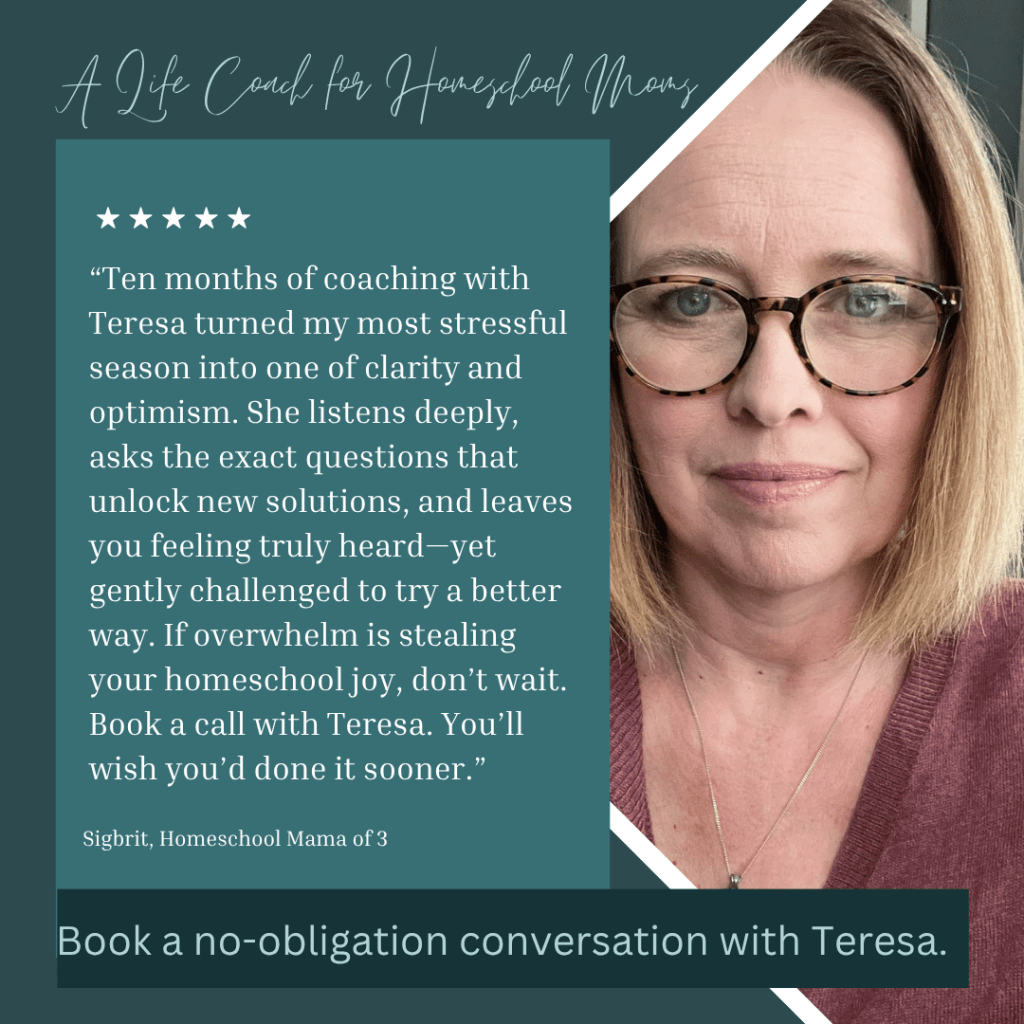
If you’re ready to create a homeschool routine that actually serves you, I’d love to support you. Book your free Aligned Homeschool Reset session with me, and we’ll talk about what building backward actually looks like in your unique homeschool situation.
People also ask:
- 3 Things You Need to Know Before You Homeschool
- How to Create a Simple Homeschool Routine with Kelly Briggs
- How to Homeschool and Not Lose Yourself: A Path Back to Wholeness with FLOW
- How to Take Care of the Homeschool Mama: Morning Journaling Routine
- How to Incorporate Ten Self-Care Tips for Homeschool Moms
- 6 Game-Changing Ways to Streamline your Homeschool Routines
- Reset For Home Educating Moms: Breaking Free From Guilt And Overwhelm
- Everything you want to know about time & routines
- How to Create a Homeschool Routine that Works for You
- Reset Your Homeschool Life: Why Summer is Your Permission Slip
- 10 Simple Steps to the Homeschool Life (& Live it on Purpose)
- Why I Homeschool, Unexpected Challenges & My Transformation
- Learn about morning routines
- How to Create an Energizing Homeschool Morning Routine

Teresa Wiedrick
I help overwhelmed homeschool moms lead with confidence, clarity & presence – so it feels aligned inside & out.
Join me to reset your homeschool life and reconnect with what matters most.
Subscribe to the Homeschool Mama Self-Care podcast
