
Podcast: Play in new window | Download
Learning how to create a homeschool routine that actually works starts with getting clear on three things:
- What do you think an education is, anyway?
- What’s your vision for your homeschool?
- How do you and your kids function during your days?
First-Year Moms: Start by jotting down your hopes for your child’s learning and your family rhythm.
Experienced Moms: Revisit your vision—how has it evolved over the years? Are your routines supporting the growth you’ve seen so far?
Grab your free Confident Homeschool Roadmap — Start Your 1st Year with Confidence.

How To Create a Homeschool Routine That Works for You?
Here are six tips to help you create a homeschool routine that works for your family:
- Set Clear Goals – Define your educational objectives and priorities. Determine what you want your child to achieve academically, socially, and personally.
- Establish a Consistent Schedule – Consistency is the backbone of any good homeschool routine. Decide on a daily or weekly rhythm that fits your family.
- Include Core Subjects – Allocate time for math, language arts, science, and history, keeping your child’s peak learning times in mind.
- Incorporate Breaks – Short breaks between subjects help prevent burnout and maintain focus. Use them for stretching, outdoor time, or a healthy snack.
- Build in Flexibility – A good homeschool routine bends. Some days need more time on a tough topic; other days leave room for deep exploration.
- Include Enrichment Activities – Hands-on projects, activities, and field trips aligned with your child’s interests make the routine come alive.
First-Year Moms: Focus on one or two key tips this week—don’t overwhelm yourself.
Experienced Moms: Use these tips to refine your existing routine. Ask yourself: “What’s working, and what could be improved?”
Remember, a homeschool routine is a tool—not a cage. It should help you reach your educational goals while protecting your family’s well-being. Aim for both structure and flexibility as you shape your day.
Create a Homeschool Routine, Not Just a Schedule
Staggering Learning for Different Ages
If you’re teaching multiple children at different ages, consider staggering learning blocks to match their attention spans and energy levels.
First-Year Moms: Plan one or two staggered blocks per day so older kids can work independently while you guide younger ones.
Experienced Moms: Rotate learning blocks to challenge older kids and allow guided exploration for younger ones. Use a visual schedule so each child knows when it’s “their time.”
Staggering learning blocks like this reduces overwhelm and meets every child where they are.

Set Up Your Morning Routine Before the Homeschool Day Starts
One of the most important things you can do is set your day with intentional energy and thought. Listen to yourself before you listen to your kids.
I start the day with a cup of coffee and milk, a UV light, my daily morning mama affirmations, and journaling—well before I think about our homeschool routine for the day.
Building a morning routine as a homeschool mom, so you’re kick-started before the kids wake up, is the goal—even though it’s a real challenge with young kids. It might not always be realistic, but it’s still worth aiming for. That doesn’t mean setting your alarm for 4:00 a.m. I never did that, and my kids would laugh if I suggested it to you.
Still, the goal is to be up before the kids, especially the little ones, so you can set your day—and your homeschool routine—with intention.
First-Year Moms: Journaling can help you track curriculum, routines, and what sparks your child’s interest. Keep it simple!
Experienced Moms: Expand your journaling beyond academics—capture family dynamics, emotional atmosphere, memories, and your own growth. Reflect on what’s working in your routine and what patterns you want to change.
Write three focus words at the top of your journal to remind yourself how you want to show up today.
This year, mine are: encourage, expand, invite.
Choosing focus words sets your mind to approach the day—and your homeschool routine—the way you want to.
First-Year Moms: Pick one focus word per week to avoid overwhelm.
Experienced Moms: Revisit your focus words each month—do they still align with your values, homeschool goals, and life intentions?
How can you weave your own interests into your morning basket?
Speak Daily Affirmations to Yourself
There’s no magic bullet in reading daily affirmations, but it does set your mind on the right things. Praying and meditating with intention, and asking God for help, strengthens my resolve and clarity before I ever open our homeschool routine for the day.
Speak kind, loving words to yourself before you begin.

Set Up Your Morning Routine Before the Homeschool Day Starts
Morning routines look very different depending on the age of your children.
First-Year Moms: Focus on a simple routine for yourself first, then gradually layer in routines for the kids—brush teeth, breakfast, morning activity.
Experienced Moms: Create age-specific routines. Older kids might begin with independent reading or journaling, while younger ones have hands-on play or guided activities. Timers or visual cues help everyone stay on track within your homeschool routine.
The goal is to start the day with calm and intention, not chaos.

Create a Homeschool Routine, Not a Rigid Schedule
A schedule is forced confinement; a routine is a guideline. Homeschool routines are flexible, predictable, and productive—that’s what makes them work long-term.
First-Year Moms: Start with routines that give structure without pressure. Think of them as gentle guides.
Experienced Moms: Audit your routine—are there areas where you’re over-scheduling or underutilizing time that could be better spent on relationships, fun, or self-care?
Include Fun, Connection, and Enrichment
A homeschool routine isn’t just academics—make fun memories a goal too.
- Make fun memories a homeschool goal.
- Include poetry teatime.
- Include nature study.
- Include readalouds.
- Include special party days: a not-back-to-school picnic with other homeschoolers, the first day of the homeschool party, a 100-day party, the last day of the year party, and family birthdays are days off!
- Include gameschooling.
- Create time to connect with your most important relationships.
- Build space and time in your week to build a supportive homeschool community.
- Include pinschooling.
- Create a time for a chores routine where all of you work together to clean the house. One hour each week.
- Teach your kids to cook!
First-Year Moms: Start small—choose one fun ritual each week.
Experienced Moms: Review fun and connection activities—are they still meaningful? Can you add new experiences that match your children’s evolving interests?
What do you want to include in your day? Write it down.
- Carve out a morning routine. Begin the day alone. Just fifteen minutes.
- Create a morning routine with the kids: a prayer, a lovingkindness meditation, yoga, readalouds, and discussing plans for the day.
- Ask the kids what their hopes and plans are for the day and make sure you let your kids know yours too.
- Include study time or engage in learning opportunities. (Think in subject areas or follow their curiosities).
- Include a post-lunch communal quiet time.
- Get outside and active every day.
- Slot in screen time.
- Include fun every day.
- Include household chores in your weekly routine: everyone helps.
- Include extracurricular activities, co-ops, and part-time jobs in your routine.
- Inject some homeschool hygge in your day!

Alone Time with Older Kids
One-on-one time with older children matters, but it’s tricky to protect within a busy homeschool routine when younger ones need guidance too.
First-Year Moms: Schedule a short 10–15-minute solo activity with an older child while younger children play independently.
Experienced Moms: Create a rotating schedule where each older child gets a longer block of alone time each week within your routine. Involve younger kids in parallel independent activities or a “helper project.”
This ensures older children feel seen, encourages independence, and nurtures individual relationships.

What Activities Belong in Your Homeschool Routine?
Get clear: what matters most to you? What do you value? Do you see those values reflected in your daily activities and your homeschool routine? Don’t build in things that aren’t important to you.
Like grammar and sentence diagramming, for me.
You get to decide what belongs in your homeschool day.
Time-Blocking and Practical Scheduling
Time-blocking gives you clarity on how long each part of your homeschool routine actually takes.
First-Year Moms: Track time for a week to set realistic expectations.
Experienced Moms: Compare actual vs. planned time—are there patterns where energy dips or tasks run long? Adjust your routine accordingly.
Tracking your time for a week is a great start—but once you actually see where your hours are going, you’ll probably notice the gap between your planned routine and your real one. That’s exactly what this next guide is built for.
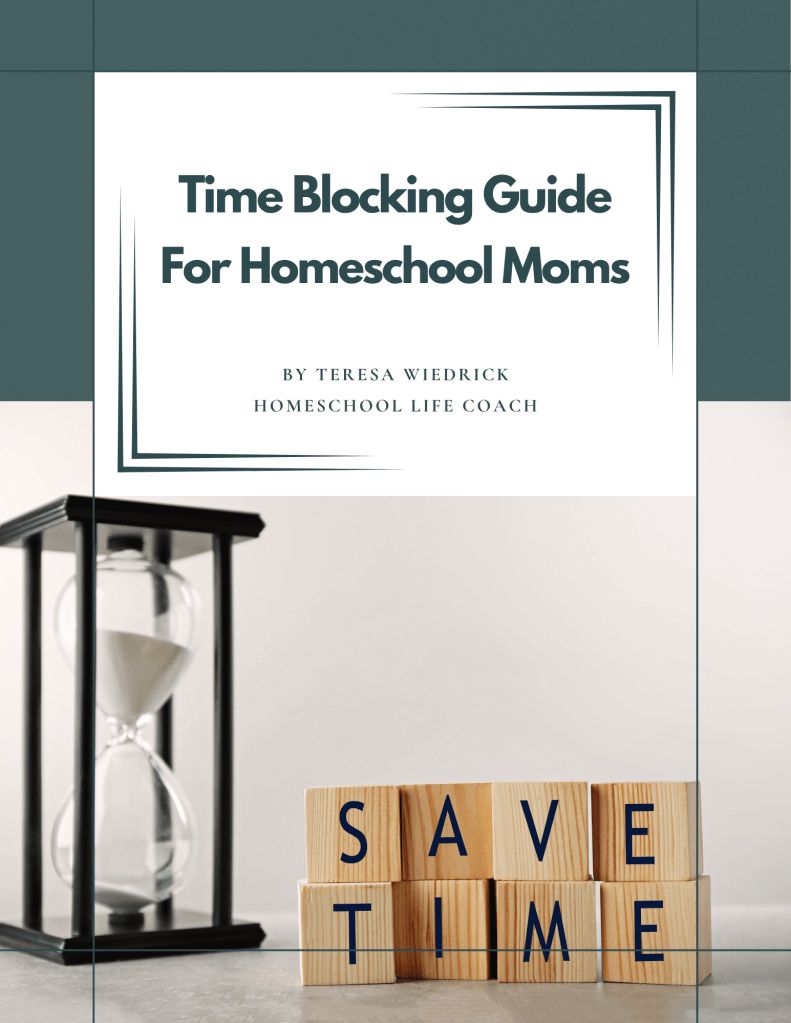
A Time Blocking & Time Audit Guide for Homeschool Moms
Feel more grounded and less scattered in your homeschool days. This printable Time Blocking Guide helps you create a realistic, flexible rhythm by showing you where your time actually goes — then helping you reclaim it. Includes a time audit, SMART goal planning, daily and weekly templates, and reflective check-ins. Stop reacting to your days and start designing them.
Make Your Homeschool Routine Work for You and Your Kids
Crafting a homeschool routine that suits both you and your kids is a transformative journey. It means aligning your educational beliefs, clarifying your vision, and understanding your family’s dynamics. Choose a routine over a rigid schedule so you can balance structure and flexibility.
Set clear goals for academic, social, and personal growth. A consistent rhythm provides stability, while breaks and flexibility prevent burnout and encourage deeper exploration.
Mix core subjects, enrichment activities, and real-world experiences into your homeschool routine for a well-rounded education.
Prioritize self-care with a mindful morning routine. Journaling, affirmations, and focus words offer clarity and purpose. Tailor your routine to your values and goals—whether that means adding fun, fostering connection, or building life skills.
As you navigate this journey, stay adaptable and patient. With intention and a well-crafted homeschool routine, you’re on the path to a rewarding homeschool experience for you and your children.
Review, Reflect, and Adjust
Regularly review how your routine is working. Stay open to adjustments based on your child’s progress, interests, and your family’s dynamics.
Or join me for a free Aligned Homeschool Reset session to clarify what matters most for your homeschool family.
Crafting a homeschool routine is a transformative journey.
It requires aligning educational beliefs, clarifying your vision, and understanding your family’s dynamics.
First-Year Moms: Use this as a starting point—your routine will grow with your confidence and experience.
Experienced Moms: Reflect on how your routines have evolved—celebrate progress and identify small tweaks to make your days smoother and more joyful.
Want to Go Deeper?
- How do you handle homeschool overwhelm in a regular homeschool year?
- Creating Learning Opportunities, not Recreating School Subjects
- How to Take Care of the Homeschool Mama: Morning Journaling Routine
- Mistakes First-Year Homeschool Moms Make (& How to Avoid Overwhelm)
- How to Create an Energizing Homeschool Morning Routine
- How to Build Homeschool Routines that Support YOU
- Unique Homeschool Help to Reimagine your Homeschool
- 6 Game-Changing Ways to Streamline your Homeschool Routines
- 7 Easy Ways to Incorporate Writing into Your Homeschool Mom Life
- Reimagine Homeschool: Nine Simple Steps to Plan for Confidence & Clarity
- How to Create a Simple Homeschool Routine with Kelly Briggs
- 7 Ways to Find Quiet, Build Boundaries & Handle Overwhelm
- “Should I Homeschool My Child?” Here’s What You Need to Know
Share This Episode
Know a homeschool mom who needs to hear this? Send her this episode.
This episode is part of our 2025 series, The 1% Pivot — because small shifts in how you lead yourself create the biggest changes in your homeschool.
Subscribe to the Confident Homeschool Mom podcast
Originally published September 2, 2025 · Updated August 15, 2026
Call to Adventure by Kevin MacLeod
Link: https://incompetech.filmmusic.io/song/3470-call-to-adventure
License: http://creativecommons.org/licenses/by/4.0/
