
Have you ever sat down to write and realized you had no idea what you actually thought?
Writing has a way of revealing us to ourselves. It isn’t just putting pen to paper or typing out a few sentences—it’s a process of discovering what we think. It’s peeling back the layers of our beliefs, clarifying the stories we’ve been telling ourselves, and shaping the ideas we want to bring into the world. For homeschool moms, writing can be transformative—not just for personal growth, but writing shapes a homeschool mom’s approach to education itself.
So I ask you: What do you believe is an education anyway? If you’re a homeschool mom, this is a question worth writing about.
It’s a question that can leave us spiraling in a dozen directions. Is it mastering multiplication tables, understanding Shakespeare, or navigating social dynamics? Or is it something deeper—more aligned with our family values, children’s individuality, and the life lessons we teach without textbooks?
What if education is about enabling us to live a purposeful life—an extension of who we truly are?
What if education is about enabling us to live a purposeful life—an extension of who we truly are?
Teresa Wiedrick, Homeschool Life Coach
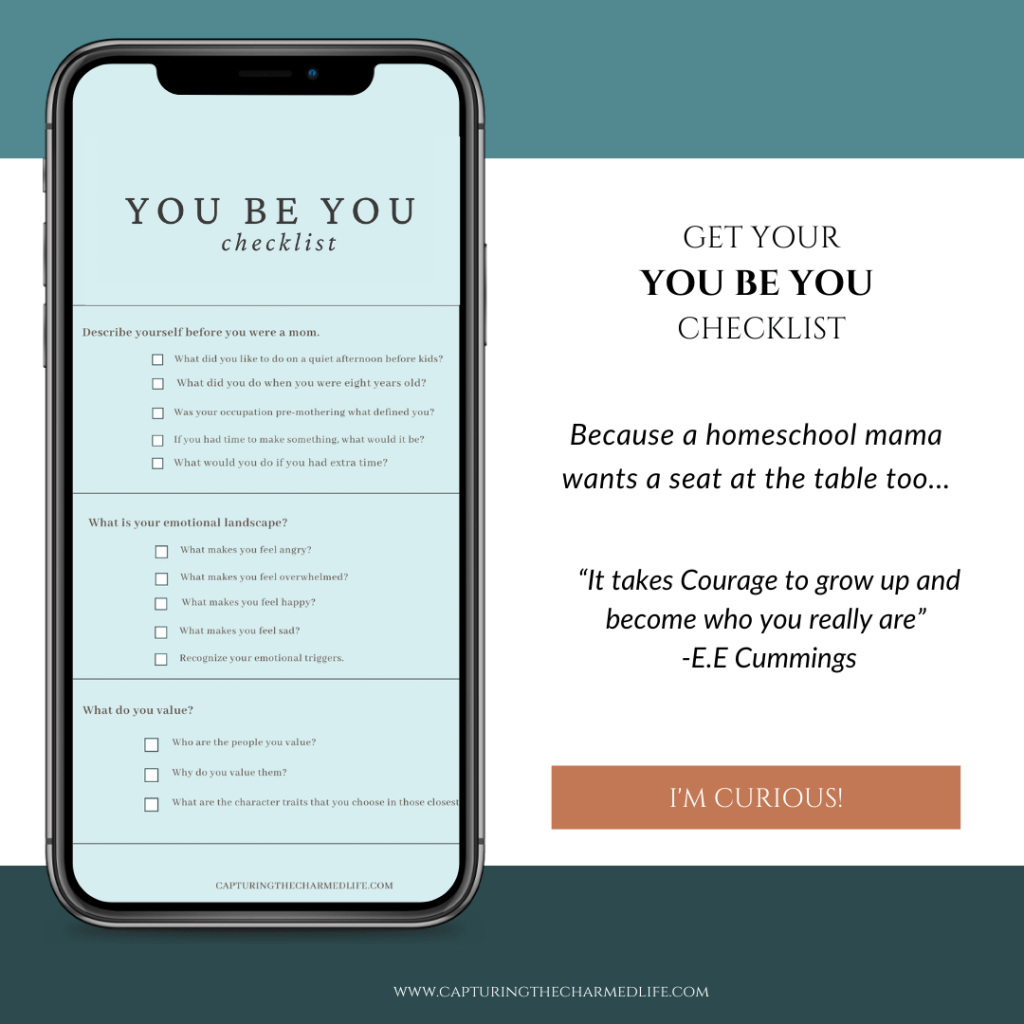
A Path to Self-Discovery: Writing Shapes a Homeschool Mom’s Approach to Education
Homeschooling isn’t just about what our kids learn—it’s about what we, as mothers, believe education truly is. And writing helps us uncover that truth.
Writing isn’t just about creating five-paragraph essays or morning journal entries; it’s a tool to reflect on your homeschool journey and your beliefs about education. When you sit down to write, you’re engaging in a dialogue with yourself—one that challenges you to go beyond surface-level thoughts.
You may ask yourself:
- Why do I believe what I believe?
- What stories from my past shape how I homeschool today?
- Am I holding onto ideas that no longer serve my family’s needs?
Take, for instance, a story from my early homeschooling years. I used to believe education meant rigorous schedules and completing a set curriculum. I clung to that belief tightly, even when my children resisted and our days felt strained. Writing about those struggles revealed a deeper fear: I was concerned about not “proving” my worth as a homeschool mom. And not providing them what they needed to create a meaningful future.
Once I could name that fear, I began to release it—and our homeschool story began to transform.
The Power of Clarity and Simplicity in Writing for Homeschool Moms
Writing doesn’t have to be complicated to be meaningful. In fact, the most powerful pieces of writing are often the simplest. Think of a time when someone’s words struck a chord with you—not because they were flashy or verbose, but because they spoke directly to your heart.
Poetry does that for me. Check out these words:
“Becoming
r.h. sin
yourself
is a journey
worth
taking.”
R.H. Sin’s poems inspire self-reflection, encouraging readers to embrace their true identity and pursue personal fulfillment.
That’s the goal in our writing: to distill complex ideas into something digestible, relatable, and impactful. When we write about education, aim for simplicity, but not simple. Cut through the clutter to uncover the truth beneath.
Writing for Connection: Building a Homeschool Mom Community
When you’re honest in your writing—when you share your doubts, your triumphs, your messiness—you create a connection with your readers. They see themselves in your story. They feel heard, seen, and understood. And they realize they’re not alone.
For homeschool moms, this kind of connection is gold. How many of us have felt isolated, unsure if we’re doing it “right”? Writing can bridge that gap. Whether it’s a blog post, a journal entry, or a discussion in the Confident Homeschool Mom Collective, sharing our words can spark conversations that build confidence, community, and clarity.

Writing Shapes a Homeschool Mom’s Approach to Education: Prompts for Writing Reflection
In the Homeschool Mama Writer’s Room, we’ll explore prompts that invite you to share your authentic story:
- Reflect on the emotional climate of your homeschool. How does it feel day to day, and how would you like it to feel?
- Consider your sense of self beyond motherhood. Who are you outside of your homeschool role?
- Define what education means to you. How does your definition shape your homeschool practices?
- Tap into your creativity and purpose. What drives you? What lights you up?
- Examine the relationships that shape your story. How do your connections with your children, partner, and yourself influence your homeschool?

Developing Your Unique Voice as a Homeschool Mom
Your voice matters. As homeschool moms, our experiences are as diverse as our children, and there’s power in sharing those experiences authentically. Reading other people’s thoughts can inspire us, but our own stories are just as valuable. Your unique perspective can inspire another mom struggling with the same questions you’ve wrestled with.
Writing with Intention: Reimagining Your Homeschool Life
Purposeful writing isn’t just about crafting a polished piece—it’s about communicating something meaningful. Each word, each paragraph, should serve your overall intention. Whether you’re writing to explore your thoughts, encourage others, or create a tangible reflection of your homeschool journey, remember your “why.”
For example, if your purpose is to reimagine your homeschool life, let that guide your writing. Maybe you want to write a vision statement for your family’s education. Maybe you want to journal through frustrations and uncover solutions. Whatever it is, write with intention, and let the process guide you.
From Shitty First Drafts to “Publish”
No one writes perfectly the first time. Anne Lamott coined the phrase “shitty first drafts” for a reason. Your first attempt might feel clunky, but it’s the foundation for something better. Editing is where the magic happens—where your ideas become clearer, your stories more impactful, and your voice more confident.
Homeschool moms often feel pressure to “get it right” (in homeschooling and writing), but both are iterative processes.
And when you’re ready, hit publish. You can continue to refine your writing till the cows come home. (Even if you’ve never bought a cow.) Just hit publish and accept this as your thoughts and written piece now.
Join the Conversation in the Confident Homeschool Mom Collective
In the Confident Homeschool Mom Collective, we’ll gather monthly in the Writer’s Room to discuss our writing ideas and plans, work through prompts, and support each other in crafting meaningful reflections. This isn’t just about honing your writing skills—it’s about reimagining your homeschool life.
Writing isn’t just a tool for clarity—it’s a way to connect with ourselves, our families, and each other. Let’s reimagine what education can be, one word at a time.
What You Can Write Today
Take a moment today to free-write on this: ‘Education, to me, is…’ Then share your thoughts with us in the Writer’s Room.

Rediscover Yourself Beyond Homeschool Mom Guidebook
NURTURING YOU: A Digital Workbook for Homeschool Moms | Instant Download
Rediscover yourself beyond homeschooling with this 14-page guide. Packed with exercises for creativity, self-awareness, and personal growth — perfect for busy moms looking for balance and “me time.”
People also ask:
- Reignite Your Spark as a Homeschool Mom in 10 Powerful Ways
- you know you’re a homeschooler when you happen to know…
- How to Teach Writing in a Child-Directed Way
- Homeschool Mom Books & Courses for Confidence and Presence
- Homeschool with Purpose: Honouring our Values & Priorities
- You’re Invited to the Confident Homeschool Mom Collective
- Advice from Julie Bogart’s Homeschool
- Discover 10 Signs You Need a Homeschool Life Coach to Thrive
- A Homeschool Reading List for a More Confident and Intentional Life
- Creating the Not So Big House with Sarah Susanka
- a readaloud family book list we love (& provides adventure too)
- Homeschool Mama Book Club for Inspiration, Growth & Clarity
- Tell me about all the books in the Homeschool Mama Book Club
- Dive into 10 Helpful Books for Homeschooling Moms!
- Making our Homeschool A Little More Beautiful with Sarah Mackenzie
- How a Homeschool Life Coach Can Transform Your Journey as a BC Homeschool Moms

Teresa Wiedrick
I help overwhelmed homeschool mamas shed what’s not working in their homeschool & life, so they can show up authentically, purposefully, and confidently in their homeschool & life.
