Podcast: Play in new window | Download
Breaking generational patterns as a homeschool mom is some of the most important work you will ever do. And a few weeks ago, Diane Sorensen and I had a conversation that brought that home for me all over again.
We talked about the good girl who became the good mom — the one who kept the peace, said yes when she meant no, and made sure everyone around her was okay. We talked about what that costs her.
But here’s the question I keep sitting with since that conversation:
Where did the good girl learn to be good in the first place?
Because that’s where the generational pattern lives. That’s where the unhealthy cycle began its life. And that is what today’s episode is all about.
If you haven’t yet listened to that conversation with Diane — go find it after this one. It’s called The Real Cost of Being the Good Girl Who Became the Good Mom, and it sits right alongside everything we’re talking about today.
Before We Begin — What Breaking Generational Patterns as a Homeschool Mom Actually Means
Breaking generational patterns as a homeschool mom doesn’t happen by intention alone — and it also doesn’t happen overnight.
I want to share a belief I hold around this topic — because I think it needs to be said before anything else.
You cannot break a cycle you don’t understand.
And you’re not going to break a cycle completely and absolutely. You have your entire life to figure out how to do that. I prefer the term cycle interrupter over cycle breaker — because there is no magic formula here. The cultural conversation around breaking cycles can feel, if we’re not careful, a little too easy. As though declaring yourself a cycle breaker is the same as doing the work.
It isn’t.
What I do know is this: what you believe dictates how you experience life. The stories and the limiting mindsets you created when you first had a moment of trauma or challenge — or when you began recognizing generational patterns within your family of origin — those stories have a dramatic effect on everything. On how you approach your homeschool, your relationships, and how you see yourself.
But it is 100% shiftable — the moment you acknowledge it. The moment you see it, you cannot unsee it. And that is where change begins.
The Song That Keeps Coming to Mind
About half of the women I work with are full-fledged focused on breaking generational cycles — or at least giving voice to the limiting mindsets that have kept them small, not living their fullest lives.
And the song that keeps coming to mind when I sit with these women?
This Is Me from The Greatest Showman — sung by Keala Settle. About not being a stranger to the dark, about hiding away, about learning to be ashamed of your scars, and about being told that no one will love you as you are.
And then — the moment she decides she won’t be broken down to dust, that she is brave, that she is bruised, and that she is not scared to be seen.
That song epitomizes what breaking generational patterns sounds like from the inside.
If you don’t know it — listen to it here: This Is Me by Keala Settle from The Greatest Showman. Because those lyrics are the anthem of this episode.
That song captures exactly what breaking generational patterns as a homeschool mom feels like from the inside.
Five Ways I’ve Been Breaking Generational Patterns as a Homeschool Mom
Here are five ways breaking generational patterns as a homeschool mom has shown up in my own life.
I share these not to hold myself up as an example — but because I know that when you hear someone say out loud the thing you’ve been living quietly, something shifts. It invites you to shift too.
Cycle One — I listen when my kids are vulnerable. My parents didn’t.
“You can’t tell a kid how to calm down, you have to show them.” — Jodi Carrington
My parents didn’t consistently listen when I was vulnerable. Not because they wouldn’t have wanted to — but because they were so locked into their own inner worlds, so focused on finding safety in their own experience, that they didn’t have capacity to hear mine.
A very wise daughter said to me once — mom, the experiences you had as a child are not the ones I’ve had. We are not dealing with the same things.
That stopped me. Because I had been so caught up in my own story that I couldn’t conceive there was a completely different narrative happening inside my own home.
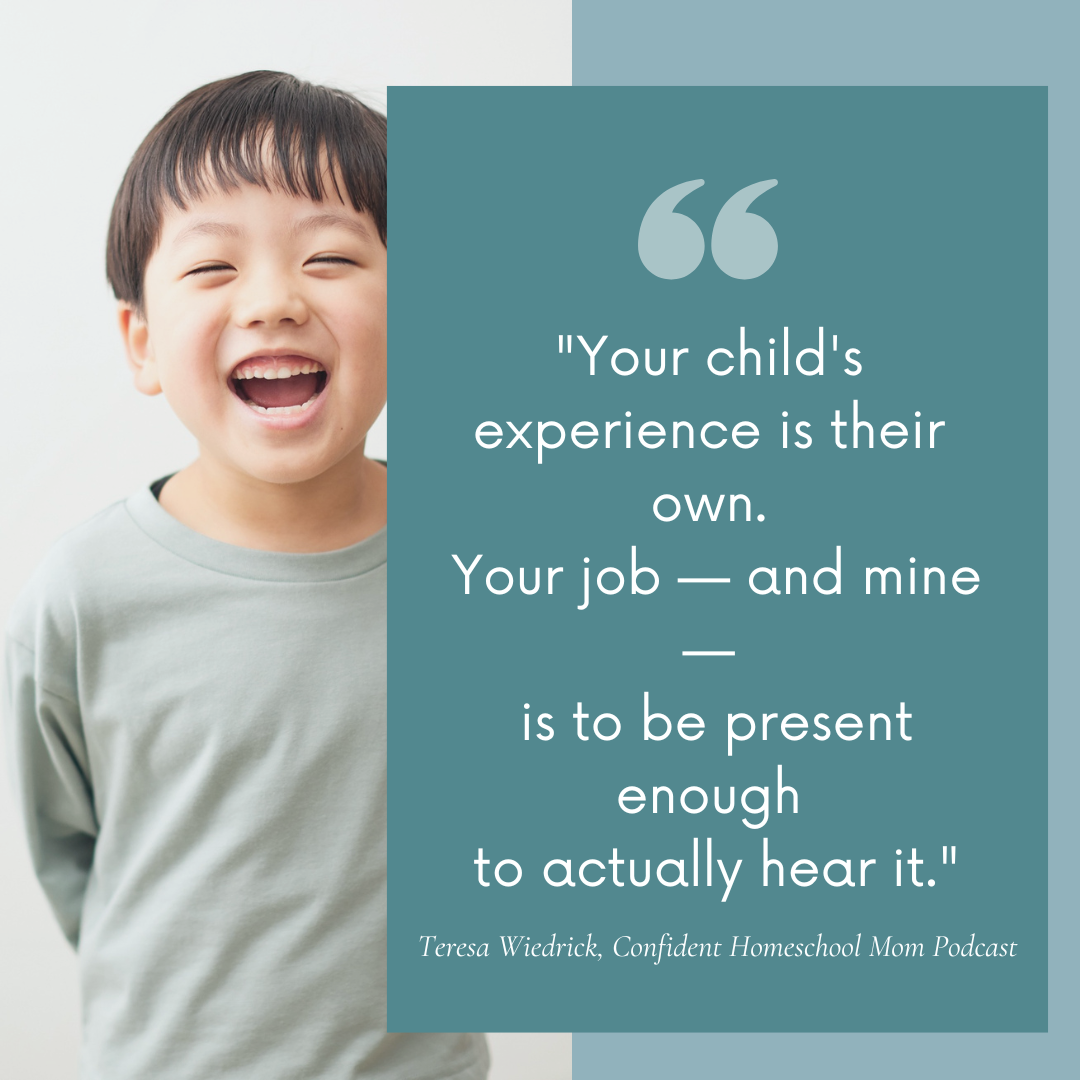
Your child’s experience is their own. Your job — and mine — is to be present enough to actually hear it.
Cycle Two — I don’t make my kids responsible for my emotions.
“The more times big people are able to regulate in the physical presence of a child, the better that child begins to develop the skills of emotional regulation.” — Jodi Carrington
This is one I still catch myself in occasionally. But the quality of conflict in my home is completely different than it used to be.
This past weekend I was trying to book a family event. The website wasn’t working. I tried another. I called the place directly. By the time I got to my kids they were frustrated with me. And I do not like disappointing the people I love.
But here’s what I noticed: a long time ago I would not have been able to hear their disappointment at all. I would have been so locked in my own frustration that I couldn’t take in that they were disappointed. I would have made their frustration entirely about me.
Instead I held my own emotions. I heard theirs.
That is breaking generational patterns as a homeschool mom in real time — not perfectly, but meaningfully.
Cycle Three — I ask my kids what they want and feel. No one asked me.
This is partly why I am so fierce about homeschooling the child right in front of you. Not a curriculum. The actual child. Their actual interests. Their actual curiosity.
I wasn’t asked what mine were.
I loved my grade four teacher — Ms. Brenda Wiens at Harry Balfour Elementary in Grande Prairie, Alberta. She liked my drawing of lords and ladies. She gave me stickers on my birthday. And I was so starved for the feeling of being seen that I actually convinced myself she was my real mother. I planned to tell her. I told my mother first. Spoiler — Ms. Wiens was not my real mother.
But that is what happens when a child feels unseen. The mind creates stories to explain the gap.
So now I do the intentional work of making my kids feel seen. Fifteen minutes of eyeball-to-eyeball time where they lead. One-on-one trips — like the one to Newfoundland with just our son, where he caught cod after cod on the Atlantic and still wouldn’t eat a bite of it.
However, we do it — we show up for our kids in ways that make them feel seen on their terms.
Cycle Four — I stopped pursuing my mother for validation.
This one is on the fresh side. Not new — but fresh.
You’ve heard me reference the Mother Wound. I have a couple of episodes on that topic if this is new to you — go find those after this one.
For a long time, I could see, plain as the sun rising, that my father’s behaviour was the source of so much fear and pain and unpredictability in our home. What took me much longer to understand was the dance that occurred between my parents — and the role my mother played in that dance. Subconsciously. An agreement to participate in a dynamic that had its own rules, to satisfy the unmet needs of each of them.
What the Eldest Daughter Carries
As the eldest daughter, I played my own unique role in all of that. First and foremost as a sort of parent — for those who didn’t know how to maintain peace, or for those who didn’t know what to do with the unhinged moments of unpredictable mental illness, anxiety, and violence.
I was the one who held it together. Who read the room before she could read books. Who managed everyone else’s emotional world while her own went unattended.
I came to understand that my mother has a limited capacity to fully see me — and to address the hardest challenges between us.
But the little girl inside me still wants her. Still needs her. Still desires that mother — no matter how old I’ve become.
Breaking the pursuit cycle means that when I don’t get my needs met from her — I turn inward. I ask myself: what do you need right now? And I find a way to give that to myself.
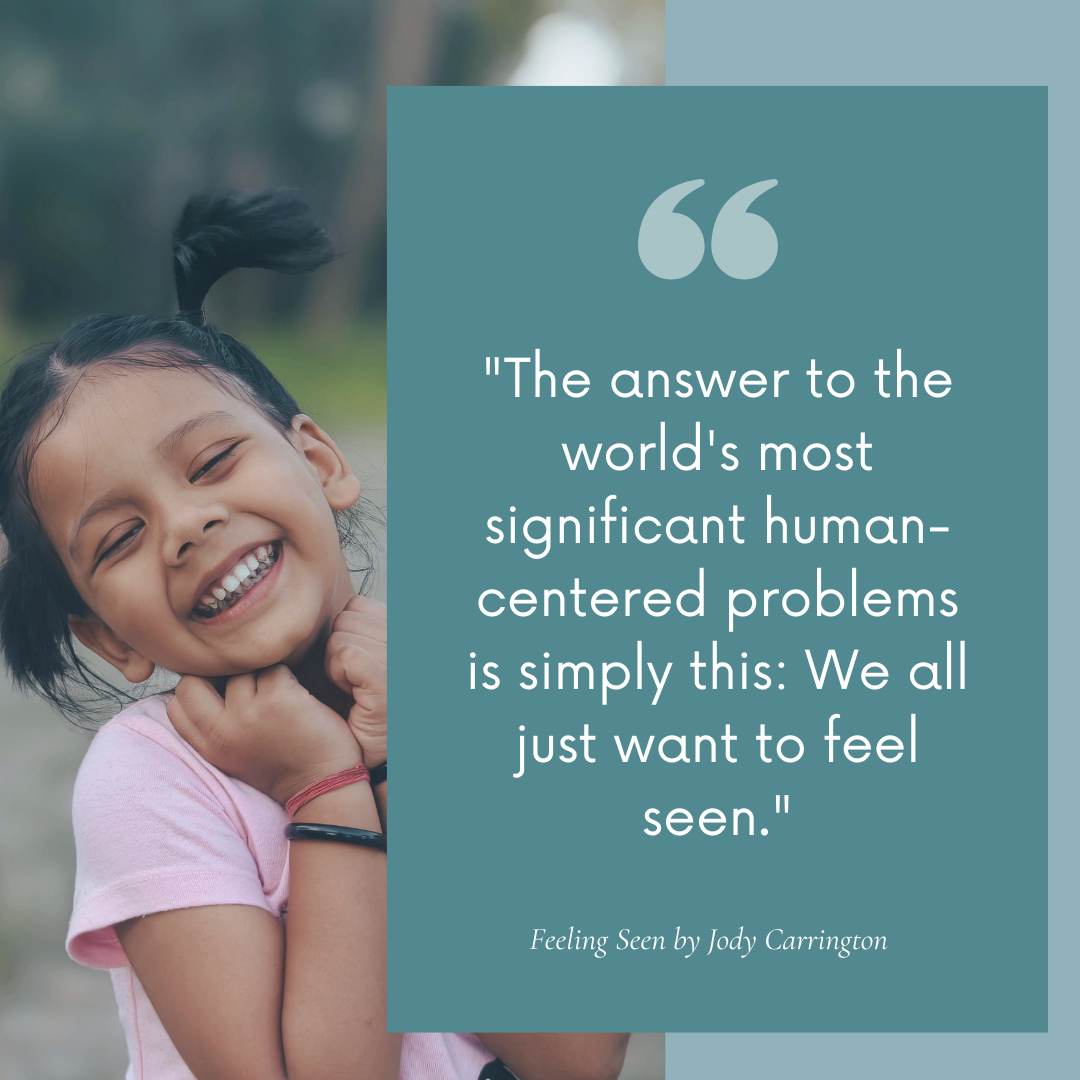
“The answer to the world’s most significant human-centered problems is simply this: We all just want to feel seen.” — Jodi Carrington
When we stop looking for that exclusively from the people who cannot give it to us — who have proven repeatedly that they can’t and they don’t know how — that is when we begin to find it in healthier places. In the people who actually can.
Cycle Five — Breaking the Silence.
This is the most radical break of all.
I routinely receive emails from homeschool moms who are living in isolation and fear — unable to get out of very unhealthy relationships. And I hate that they feel trapped like that.
I have lived experience that you cannot make someone get out. They have reasons for staying.
But if you are someone who has broken her silence — who has left something like that — I want to say: bravo!
You are doing extraordinary work. The hope and clarity and life you are bringing to your relationship with your kids and yourself — that is no small thing. And your children are receiving something that was never given to you.
That is the cycle breaking. Right there.
I’m sure it feels wobbly. But I believe in you. And the little girl inside me is genuinely grateful that you are doing it for your kids.
The Email That Arrived This Week
Just this past week I received this from a woman I’ve been coaching:
“I feel I need help in learning how to parent myself. However, I have no idea how to do that and that’s what’s stressing me. Because I know a coach isn’t supposed to provide solutions to the coachee. So my question right now is do I need to prep myself before we meet? And what should I be doing or asking myself in order to parent myself?”
And here is what I wrote back:
“What a beautiful self-awareness. When did that become clear? Tell me why you believe reparenting would be useful for you now. And what about this conversation stresses you?
Reparenting — also known as self-coaching — is a very useful tool. Been there, done that, still do.
Your relationship to yourself is the most important thing. It directly informs how you relate to everyone else too.
Before we next meet, you could get clear on a few things:
- What part of you knows she needs to be reparented — and when did you first begin to notice?
- If you had identified a need in front of your parents — how would they have responded?
- Your ideal self as a parent to your kids — what would she do differently?
Those three questions are for you too. Right now. You don’t need to be in coaching to ask them. You just need to be willing to sit with the answers.
We Are Story
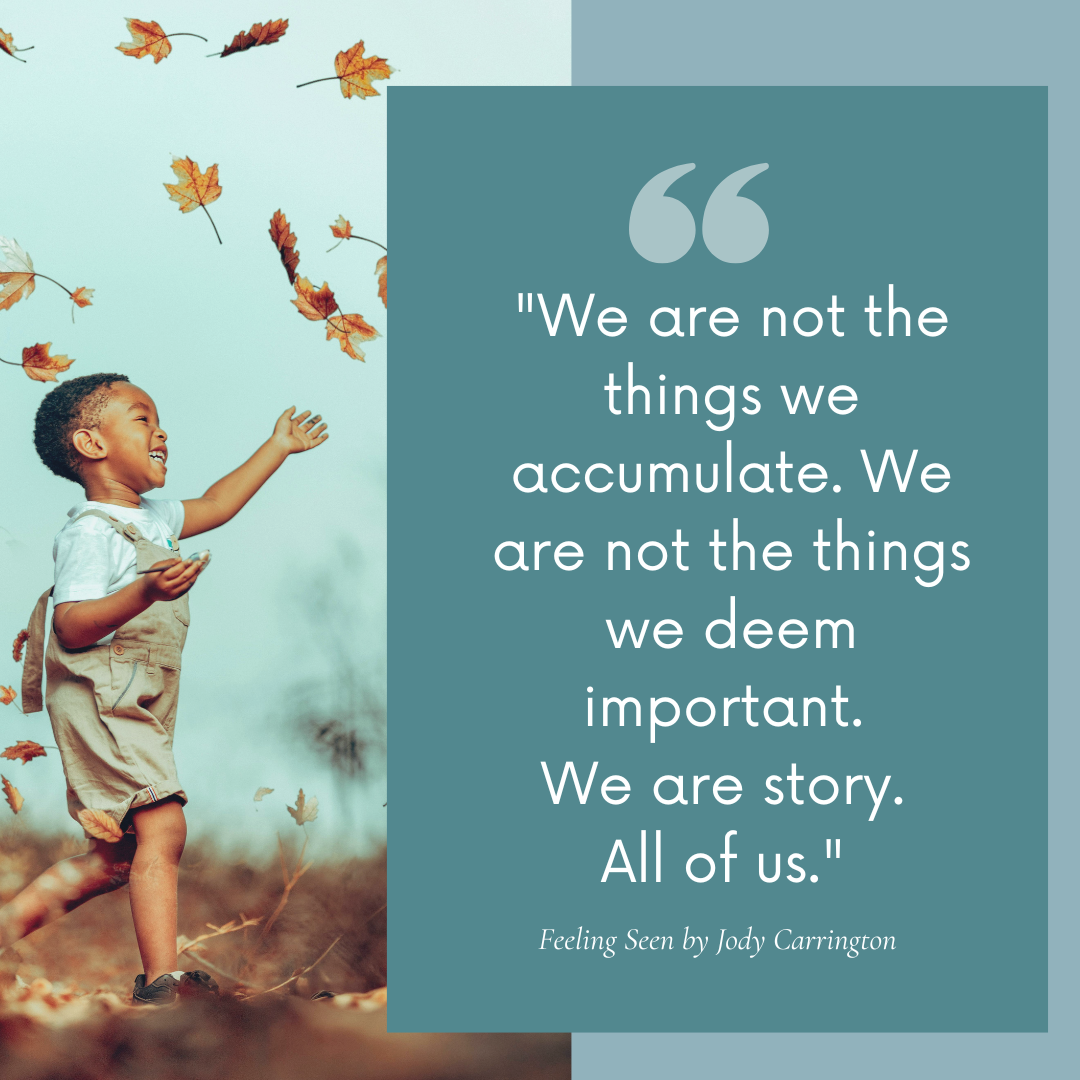
“We are not the things we accumulate. We are not the things we deem important. We are story. All of us.” — Jodi Carrington
Girlfriend. That line.
We spend so much time in the homeschool world accumulating things — curriculum, resources, methods, proof that we are doing this well enough. And I get it. When you have chosen an unconventional path, you want evidence that it’s working.
But here’s what I know after two decades in this space: your kids are not going to remember the curriculum. They are going to remember you. Whether you were present or distracted. Did you listen or deflect? And in the hard moments — did you repair, or did you disappear into shame?
That is the story. That is what gets passed on.
And the generational pattern — the one we have been talking about today — that is a story too. One that was written before you were old enough to hold a pencil. One that you have been living inside without consciously knowing it was there.
The moment you see it — really see it — you can begin to write something different.
Not all at once. But differently. That is the generational pattern and that is what breaking generational patterns as a homeschool mom is really about.
Ready to Start Breaking Generational Patterns in Your Homeschool?
Book a Free Aligned Homeschool Reset Session
If there is a cycle you are sitting in right now and you’re not sure where to start — book a free Aligned Homeschool Reset Session with me. It’s a no-obligation conversation where we get clear on what’s really going on, what might need to shift, and how you might begin to do that.
Reading That Restores You — Book Club Newsletter
Every Wednesday morning, a warm, thoughtful reflection lands in your inbox drawn from the books we’re exploring together — including Jodi Carrington’s Feeling Seen. Journaling prompts. Practical takeaways for your homeschool and your life. You don’t have to read the book. You just have to show up for yourself on a Wednesday morning.

People Also Ask:
- Why Seasoned Homeschool Moms Still Struggle (And How to Break Free)
- Foster Strong Relationships in Your Homeschool Family
- Are you homeschooling good enough?
- 7 Questions Homeschool Moms Are Afraid to Ask Out Loud
- The Relationship RESET Workbook
- Break the Cycle of Homeschool Mom Guilt—and Reclaim Yourself
- Everything you want to know about homeschool relationships
- How to Stop Taking Your Child’s Behaviour Personally
- How to Stop the Inner Critic as a Homeschool Mom: The Charmed Life I Was Chasing (& the Pattern I Didn’t Know I Was Living)
- 8 Ways to Build Healthy Relationships in Your Homeschool Family
- Enneagram: A Self-Awareness Tool That Makes You a Better Educator, Mom & Partner
- Grow Yourself Up: A Guide for Homeschool Mom Personal Growth
- The Real Cost of Being the Good Girl Who Became the Good Mom — with Diane Sorensen
- How the Mother Wound Affects Homeschool Moms—and How to Break Free
- Healing the Mother Wound for Homeschool Moms
- How to Stop Taking Your Child’s Behaviour Personally
- 13 Things Mentally Strong Homeschool Moms Don’t Do
- 7 Questions Homeschool Moms Are Afraid to Ask Out Loud
- Is the Way I Talk to My Kids Making Things Worse? What NVC Taught Me
- Grow Yourself Up: A Guide for Homeschool Mom Personal Growth
Subscribe to the Confident Homeschool Mom podcast
