
Self-parenting for homeschool moms often starts with a question we feel guilty saying out loud: Who is taking care of me? One mom put it perfectly in an email she sent me before our session: “I feel I need help in learning how to parent myself. However, I have no idea how to do that — and that’s what’s stressing me.”
Over the years, I’ve read thousands of messages from homeschool moms. Even so, this one landed differently, because I recognized it. In fact, I knew it not just from the hundreds of women I’ve coached, but from my own story.
I know what it feels like to have given everything to everyone around you and arrive at a quiet moment asking: Who is taking care of me?

What Self-Parenting for Homeschool Moms Actually Means
Self-parenting is not a therapy term or a self-help trend. It is simply this:
Learning to give yourself what you needed as a child and didn’t always receive.
In practice, self-parenting looks like speaking to yourself the way you speak to your children on your best days. That means using warmth and patience, along with the steady belief that says you are okay, you are capable, and you are loved even when you fail.
It also means noticing when you are depleted and responding with compassion instead of criticism.
And finally, it’s giving yourself permission to have needs, and then actually taking them seriously.
Most homeschool moms I work with are extraordinarily good at this for their children. They attune, they validate, they encourage, they repair. However, when they turn that same gaze on themselves, they go completely silent or they speak critically.
That needs to shift.
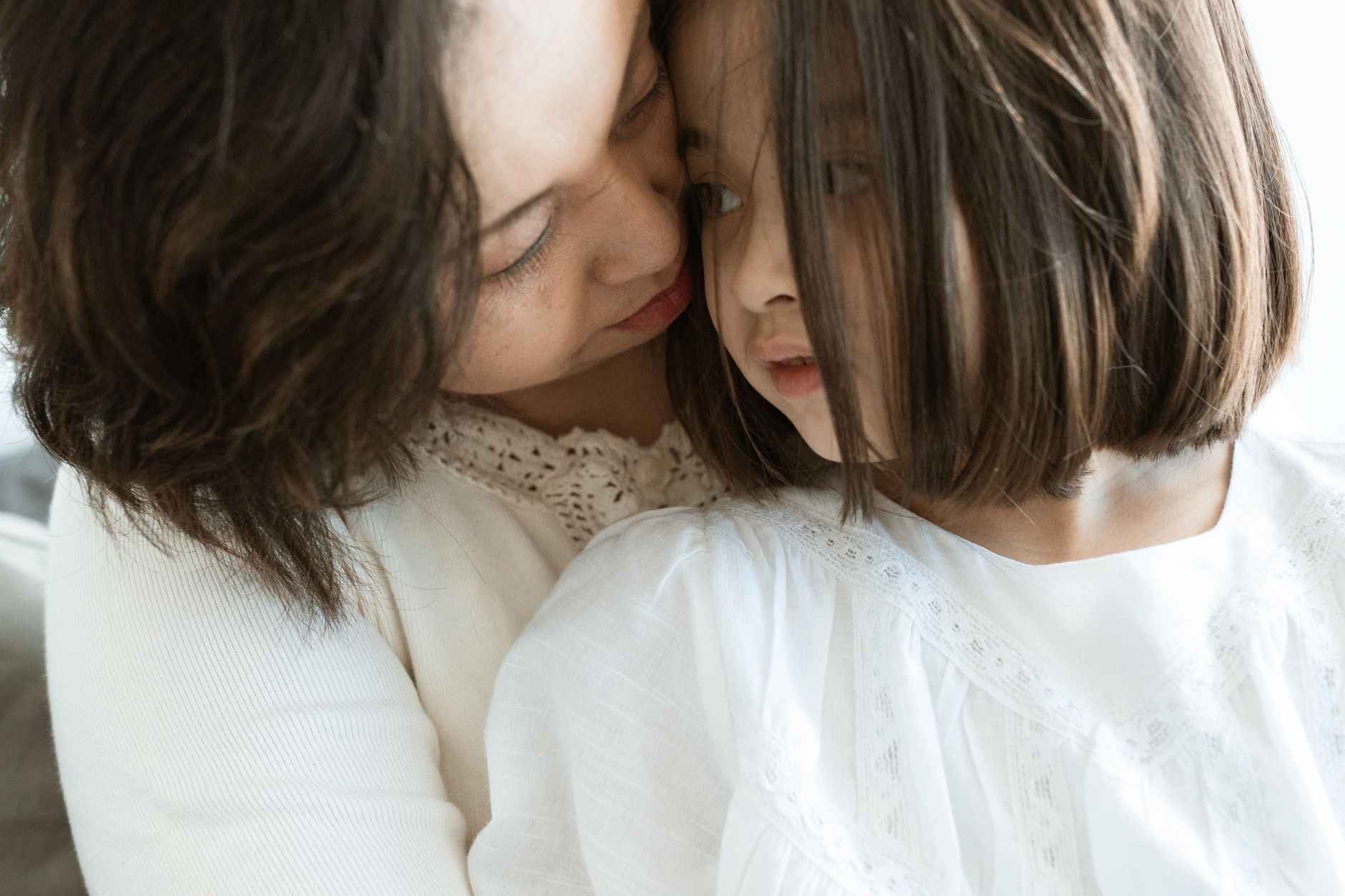
Why Homeschool Moms Need Self-Parenting Most
When you homeschool, the boundaries between your roles dissolve, which is exactly why self-parenting for homeschool moms matters so much. After all, you are the teacher and the emotional regulator. On top of that, you keep the schedule, research the curriculum, cook, and clean. When your kids are teens, you drive them to hither and yon.
Most of all, you’re the person who holds everyone’s feelings when the day falls apart.
There is no commute home to decompress. No office door to close and no clear line between work and rest.
Maybe you grew up in a home where your emotional needs weren’t consistently met. Perhaps love felt conditional, feedback felt like criticism, or asking for help felt unsafe. If so, you likely learned to keep going without asking for much.
You learned to perform or to please, and you might have learned to manage others’ feelings too.
And you brought all of that into your homeschool, and into motherhood, without anyone ever teaching you what to do with your own needs. ps I get that, because that’s my story too.

Five Signs You Might Need Self-Parenting
1. You find it easier to encourage your children than yourself.
You would never speak to your child the way your inner critic speaks to you. That gap, between the grace you extend outward and the harshness you direct inward, is where self-parenting begins.
2. You feel guilty when you rest.
Not tired-guilty. Genuinely, uncomfortably guilty — as though your worth is tied directly to your productivity. As though stillness isn’t an option for you.
If this one hits home, you’re not alone. I dive deeper into why homeschool moms feel guilty resting and how to start letting go of it.
3. You seek approval before you trust your instincts.
Of course, you know what your child needs and what feels right for your family. Even so, you still look around to see if someone (a mentor, a curriculum creator, a Facebook group) gives you permission first.
If that sounds familiar, I walk through how to make confident homeschool decisions without seeking approval in another post.
4. Other people’s opinions feel like verdicts.
Feedback doesn’t just sting; instead, it feels like it shakes something foundational. One critical comment can undo a week of confidence. This is likely an unhealed wound asking for attention.
If you’re ready to loosen that grip, here’s how to stop caring what other people think as a homeschool mom.
5. You can’t easily name what brings you happiness.
Not what brings your children joy. Not what makes your husband happy. What fills you. If that question creates a long pause — self-parenting is part of what’s missing.
What Self-Parenting Looked Like for One Homeschool Mom
The woman who sent me that email had done extraordinary work before she ever found me. She had read the books, done the courses, built the tools. She was deeply self-aware and genuinely committed to growth.
And still, she didn’t know how to parent herself.
In the weeks that followed, something remarkable happened. First, she started a morning meditation practice. Instead of fighting her difficult emotions into silence, she invited them to come with her to meet God. Around the same time, she resumed a thought care practice she had abandoned months earlier. Later, on a whim, she bought a bike, rode it, and felt proud. Finally, she started to write again.
A few weeks later, she wrote me another email listing six wins she had experienced in just a few days. At the end, she said: “My sky is blue and my heart is filled with joy.”
Although she didn’t realize it yet, she had been self-parenting all week. Each time a need came up, she noticed it and met it. On top of that, she cheered herself on. And when she asked for what she wanted, she received it.
The truth is, she already knew how. What she needed was someone to show her that she did!
That is what self-parenting for homeschool moms looks like in real life: noticing a need, meeting it, and cheering yourself on.

A Brief Note From My Own Journey
I have done this work myself. The reparenting, the self-soothing, the learning to meet my own needs rather than waiting for someone else to meet them first. For me, it has also meant breaking generational patterns in my own family, so my children don’t inherit the same wounds I did.
It is not a one-directional arrow to figuring out life. It is not always comfortable. Yet, it is some of the most important work I have ever done — not just for myself but for my children, my marriage, and every woman I have had the privilege of walking alongside.
I am not a finished product either. But I am a woman who has learned to be on her own side. And I want that for you too.
Three Self-Parenting Practices to Start Today
You don’t need a formula, and you don’t need to overhaul your life. Instead, all it takes is three small things done consistently:
1. Notice the voice.
When your inner critic speaks — and it will — pause before you agree with it. Ask: Whose voice is this really? And would I say this to someone I love?
You don’t have to silence it, just notice it. Then name it. (Which gives it a little less authority).
Not sure how to tell your inner critic apart from your own voice? I share how to recognize your inner critic in another post.
2. Ask yourself what you need, and take it seriously.
Once a day. Even just one question: What do I need right now? Not what does everyone else need. Not what should I be doing. What do I need?
And then, this is the part most of us skip: actually do something about it.
3. Speak to yourself the way you speak to your children.
You already know how to do this. You likely do it every day. (Well, except for the days you’re not speaking kindly to your kids, of course.)
But learn to speak the words you say to your children when they are struggling, the tone you use, the steady presence you offer. That is your template. Turn those words toward yourself. (Preferably in front of a mirror while you look at yourself. It’s weird, but it works!)

How Do You Know Where to Start?
Every homeschool mom carries a different kind of weight. The self-parenting work that matters most for homeschool moms depends on what you’re actually carrying — and where your greatest depletion lives.
That’s why I created the Homeschool Overwhelm Quiz.
In about five minutes, it will give you a clear picture of where your emotional load is heaviest and where small shifts could make the biggest difference.
Let’s Talk About What You’re Carrying
And if what you read in this post felt less like information and more like someone finally naming your experience — I’d love to connect with you personally.
The Aligned Homeschool Reset is a free one-hour conversation designed for exactly this moment. We’ll look at what’s feeling heavy, what you’re longing for, and whether coaching might be a useful next step for you.
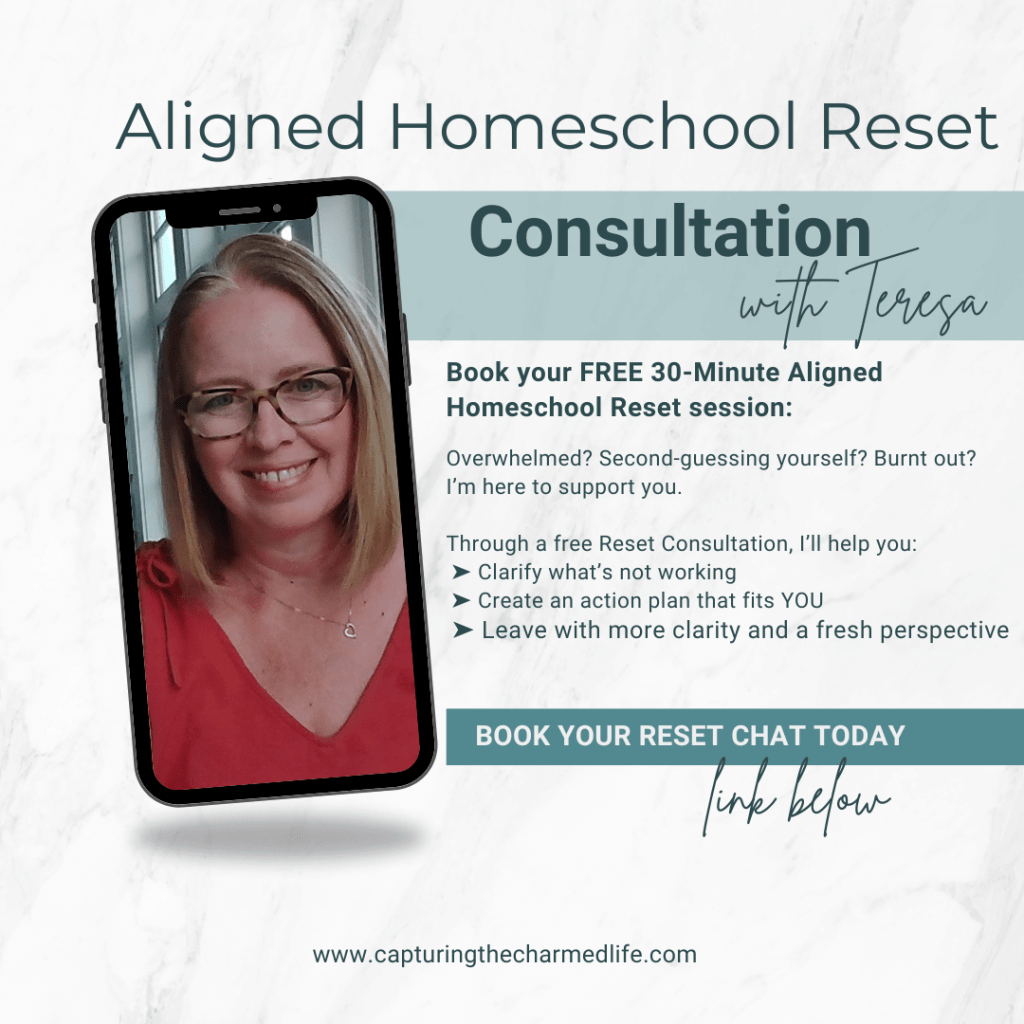
Teresa Wiedrick is a homeschool life coach at Capturing the Charmed Life. She has been coaching homeschool moms for nearly a decade and is passionate about helping women find themselves again — not just as mothers and educators, but as whole, vibrant human beings.
You Might Also Love:
- Breaking Generational Patterns as a Homeschool Mom Is the Most Important Work You’ll Do
- Healing the Mother Wound for Homeschool Moms
- How To Understand Homeschool Mom Anger: You Need To Know
- How to Stop the Inner Critic as a Homeschool Mom: The Charmed Life I Was Chasing (& the Pattern I Didn’t Know I Was Living)
- How to Handle Homeschool Criticism With Confidence
- Useful Self-Compassion Strategies for the Homeschool Mama
Subscribe to the Confident Homeschool Mom podcast
