
This might have been my biggest learning curve in homeschool: learning to incorporate fun. If you’ve been searching for fun homeschool activities, you’re already asking the right question.
Some of the best learning moments in our homeschool have looked nothing like school. They’ve looked like a car ride listening to French weather reports, a teddy bear birthday party mid-Tuesday, and a poetry teatime that ran way too long because nobody wanted to stop reading. If you’ve ever wondered whether fun and learning can truly coexist, they can. In fact, research suggests they must.
Studies in learning and child development consistently show that play isn’t a break from learning — it is learning. When children are engaged, curious, and enjoying themselves, their brains are more receptive to new information, retain it longer, and make deeper connections. So when you choose fun, you’re not abandoning academics. You’re doing some of the best teaching of your day.
Hey, it took me years to learn how to have fun. Here are 15 fun homeschool activities — tried, tested, and approved in our own home.
“Play gives children a way to practice what they’re learning.” — Mr. Rogers
1. Candy-Inspired Learning Games
Candy used irregularly in our home motivates pretty much any game. (Unless your dental plan has sweeping coverage, I don’t recommend daily use.)
Your kiddo doesn’t care for mental math games? They’ll like candy games. Have you tried Smarties word mapping? “Place a red Smartie on each verb in the paragraph. Green for nouns. Yellow for articles. Purple for prepositions.” Motivation for grammar study abounds.
Have you tried making marshmallow constellations? Or grape-skewered geometric shapes? Marshmallow and Twizzler DNA strands can be the beginning of conversations about amino acids and whether guanine binds with thymine or adenosine binds with the other one. (Sorry, it’s been a while.)

More Fun Homeschool Activities to Try
2. The weather channel drive.
The last city we lived in had a weather channel in French and English, only accessible in the car. So we’d hop in the van and take a drive around the neighbourhood. I’d brief the kids on a few words they might hear — like zero, curiously similar to English but with more pizazz — and chaud and froid. Simple, memorable, and it got us out of the house.
3. Keep their hands busy during read-alouds.
Every homeschool parent quickly discovers that kids need to keep their fingers busy while listening to a story. Painting, drawing, cross-stitching, finger knitting, playdough, Lego — all fair game. Invite the whole teddy bear family to join. And don’t forget to celebrate the teddies’ birthdays during your homeschool days, too.
4. Play real-life math games.
Give the kids a recent restaurant receipt and ask them to guess how much it would cost to make that meal at home. How much does it cost to plan your next vacation? Budget for a sibling’s birthday gift. Hand them an empty income tax form. Real math for real life — no textbook required.
5. Board and dice games.
There are loads of games that reinforce basic math, fractions, logic, and vocabulary. Yahtzee for arithmetic. Chess or Stratego for logic development. Scrabble or Bananagrams for spelling and vocabulary. The learning is real; it just doesn’t feel like it.
If you’re in your first year of homeschool and still figuring out how to build a rhythm that leaves room for all this fun, the Confident Homeschool Roadmap was made for you — grab your free copy and start your year with a solid foundation.
Documentaries and Videos: Screen Time That Counts
6. Documentaries.
There’s even a Facebook group called “Homeschooling with Netflix.” Educational screen time is best used sparingly — like candy — but when chosen well, it’s a powerful tool. Try Knowledge Network or Curiosity Stream for a wider range of options.
7. Pinschooling.
Make an afternoon of it. There are “learn to read” videos to reinforce phonics, beginner French videos, science experiments to recreate, and art projects for kids and adults alike. Pinterest was practically made for homeschoolers.
8. Poetry teatime.
Bring out the fancy teapot and teacups, a baked treat, and a poetry book. Read just one poem together. (I dare you to stop at one.)
9. Nature study — and lots of it.
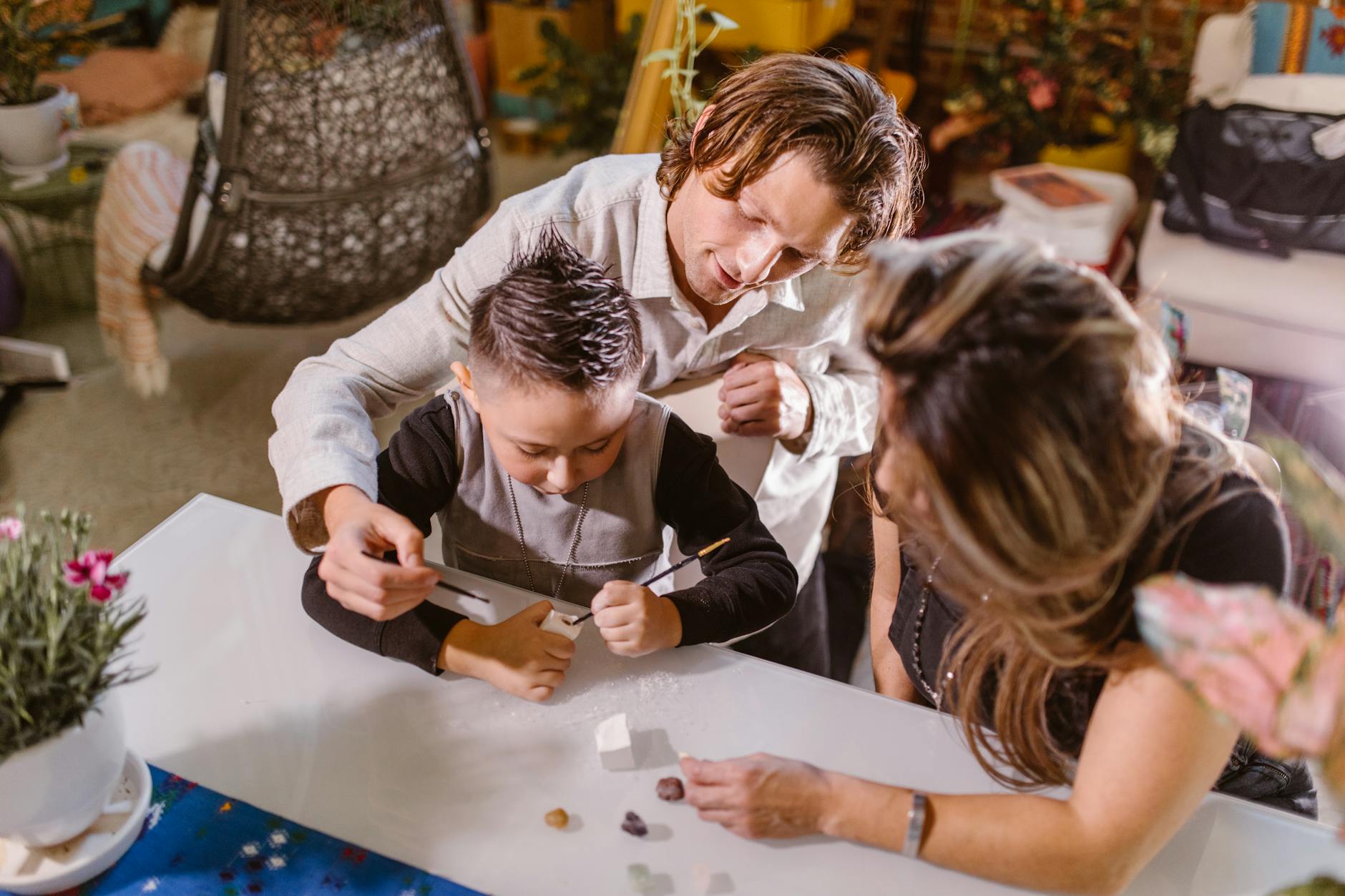
Life doesn’t get much better than wandering outside with your kids in the middle of a school day. Nature study doesn’t require a curriculum or a checklist. It requires curiosity, time, and your full attention alongside theirs.
Nature Study: Our Favourite Fun Homeschool Activity
Take it further with seasonal observation journals — sketching what they see in the backyard across different months, pressing leaves, identifying birds by sound, or simply sitting quietly and noticing. Charlotte Mason built an entire philosophy around the idea that nature is one of the most powerful classrooms available to us. She wasn’t wrong.
Try a nature scavenger hunt, a barefoot walk, a trip to identify local trees, or a simple sit-spot practice where kids return to the same outdoor location weekly and record what’s changed. The outdoor world rewards slow, curious attention — and so do the kids who practice it.
10. Read-alouds.
By far, my favourite part of homeschool. All. Those. Books. The memories each one creates at different seasons of your homeschool journey are irreplaceable. Include the books. Always include the books.
11. Special party days.
A not-back-to-school picnic with other homeschoolers, a first-day-of-homeschool party, a 100-day party, a last-day-of-year celebration — and family birthdays are always days off. Mark the milestones. They matter.
12. Gameschooling.
You call it games. We homeschoolers call it learning.
For little ones: Zingo for early reading, Sum Swamp for addition and subtraction, and Outfoxed! for logic and teamwork. For middle years: Prime Climb for multiplication and primes, Ticket to Ride for geography, and Timeline for history. For older kids and teens: Catan for strategy and economics and Scotland Yard for deduction. And Dutch Blitz for quick reflexes, and because it’s just plain fun.
13. Teach your kids to cook.
They learn fractions, how to follow directions, and basic arithmetic. And you no longer have to make dinner alone. Win-win.
14. Turn holidays into learning.
Halloween is a gold mine: pumpkin math, spooky story writing, the science of decomposing jack-o’-lanterns. Here’s how to make Halloween homeschool fun and educational.
15. Rescue the slump month.
Every homeschool hits one, usually February. That’s exactly when to drop the plan for a week and bring play back into your homeschool.
“Children learn as they play. Most importantly, in play children learn how to learn.”
O. Fred Donaldson
Why Fun Homeschool Activities Matter
Fun isn’t a reward you hand out after the real learning is done. It’s not the Friday treat or the end-of-year incentive. Fun, curiosity, and joy are the conditions under which children — and honestly, most adults — do their best learning.
When you choose to make your homeschool a place where your kids genuinely want to show up, you’re not lowering the bar. You’re raising it. Here’s how to build more play into your homeschool day.
These are just some of our favourite fun homeschool activities — but the best ones will always be the ones that fit your family. So lean into the teddy bear birthdays. Drive around the block for the French weather report. Let the poetry teatime run long.
The learning is happening. It just looks like fun.
Ready to build a homeschool that feels as good as it looks?
Grab your free Confident Homeschool Roadmap and start creating a rhythm your whole family can thrive in.
One of the most common first-year mistakes? Recreating school at home and leaving no room for fun. If you’re new to homeschooling, The New Homeschooler’s Quick Guide walks you through the 9 mistakes I see most often, so your first year has space for the poetry teatimes and teddy bear birthdays, too.

The New Homeschooler’s Quick Guide: 9 Mistakes to Avoid for a Stress-Free First Year
“The New Homeschooler’s Quick Guide: 9 Mistakes to Avoid for a Stress-Free First Year” will help you confidently begin your homeschooling journey! This Quick Guide, crafted by an experienced homeschool parent, is your roadmap to a successful start.
Related Posts
- How to Incorporate Play into Your Homeschool Day
- Unlocking the Power of Play: 11 Scientific Benefits for Homeschoolers
- The Role of Imagination in a Home Education
- How to Simplify Your Homeschool (Because Complexity Ain’t Fun!)
When Homeschool Feels More Like Pressure Than Play
Sometimes fun is the first thing to go when you’re tired, stretched, or second-guessing everything. If your homeschool feels more like pressure than play right now, let’s talk. A free Aligned Homeschool Reset Session helps you see what’s really getting in the way, and what to change first.
Book your free Aligned Homeschool Reset Session
I help homeschool moms trust themselves, edit expectations, and make intentional choices that create a more confident, connected, and present homeschool life.
Subscribe to the Confident Homeschool Mom podcast
Originally published March 9, 2022 — updated October 24, 2026
