Podcast: Play in new window | Download
It was 11 p.m. on the night of the Royal Wedding, and I was standing in a hotel hallway in my pyjamas with a ten-year-old who refused to sleep. My daughter had become so captivated by British history — a perfect example of child-led learning in your homeschool — that she wasn’t going to miss Kate and Will’s wedding for anything, not even a full day of homeschool conference ahead of us.
That moment, bleary-eyed and laughing in a hotel corridor, taught me more than any curriculum guide ever had. When a child is truly interested in something, you don’t have to push, plan, or persuade. You just have to get out of the way.
But I didn’t always know that. For years, I tried to do it the other way.
There are things I want to impart to my kids, no question. But learning doesn’t necessarily happen because I said something out loud, or because the kids read through a passage, narrated it, did the math worksheet, completed the lab report, or watched the video.
There were some days I expected them to be like little computers that could receive a daily upload. (I did this because it made me feel that their education was being created and measured.)
If I could do the work to research a topic, buy the book, plan the lesson, and teach it — once, twice, then reinforce it — the kids should learn, right?
Alas, with many kids and many years, I’ve learned that most learning does not happen that way. So how do you actually facilitate child-led learning in your homeschool?
New to homeschooling? Starting your first year can feel like a lot — and child-led learning is a whole new way of thinking about education. Grab the free 1st Year Confident Homeschool Roadmap and start with clarity, not chaos. Get it here →
What I Learned the Hard Way About Child-Led Learning
In my early homeschool years, I often tried a classical teaching approach — readings, lectures, narrations (aka homeschool mama testing) — and I was utterly surprised, and often frustrated, that they couldn’t regurgitate what I’d taught.
Surely if I had done all the work, and been creative and interesting, they would be able to spit it back. Right?
Here’s what I actually learned:
- If kids can discuss their readings, they are much more likely to process and retain them.
- If they can narrate — tell me back something — I’m much more likely to hear them mention it later. But not always.
- If we revisit a topic more than once, more than twice, it tends to stick. At least temporarily.
- But if they are genuinely interested in a subject, their brains are fully front and present.
- There is no need to entice them to engage. Engagement comes naturally, and easily.
- And the depths they can go when given real time to pursue their interests? Remarkable.
I’ve since learned that child-led learning in your homeschool works. It really works.
And if you want a deeper look at all the reasons this approach is so powerful, check out Child-Led Learning Benefits Your Kids (& You) Will Love.
1. Your Kids’ Interests Can Always Be Accommodated in Your Homeschool
Our oldest daughter had a long-time interest in British history — sparked, possibly, by an Usborne book or a historical fiction novel. When Kate and Will married, we were at a homeschool conference. She was so captivated that we decided to forgo sleep in the hotel to watch the ceremony together — just as I had done when Charles and Diana married.
Her interest continued and she wove British history throughout her homeschool years.
Our second daughter was interested in all things zoology before she was even formally homeschooled — underwater animals, creatures in the air, animals barking in the backyard. The week before she left for college, I took photos of her with every animal on our homestead: our twenty chickens in Cluckingham Palace, Violet our Great Pyr, our cats Neptune and Meredith, and our three goats, Clover, Thistle, and Poppy.
That interest, so vivid when she was two, had threaded itself through her entire homeschool education.
Either of these topics — or truly any topic — can become a full-fledged curriculum. If you think in traditional subject areas, you can learn to incorporate your child’s interests into all of them.
Writing
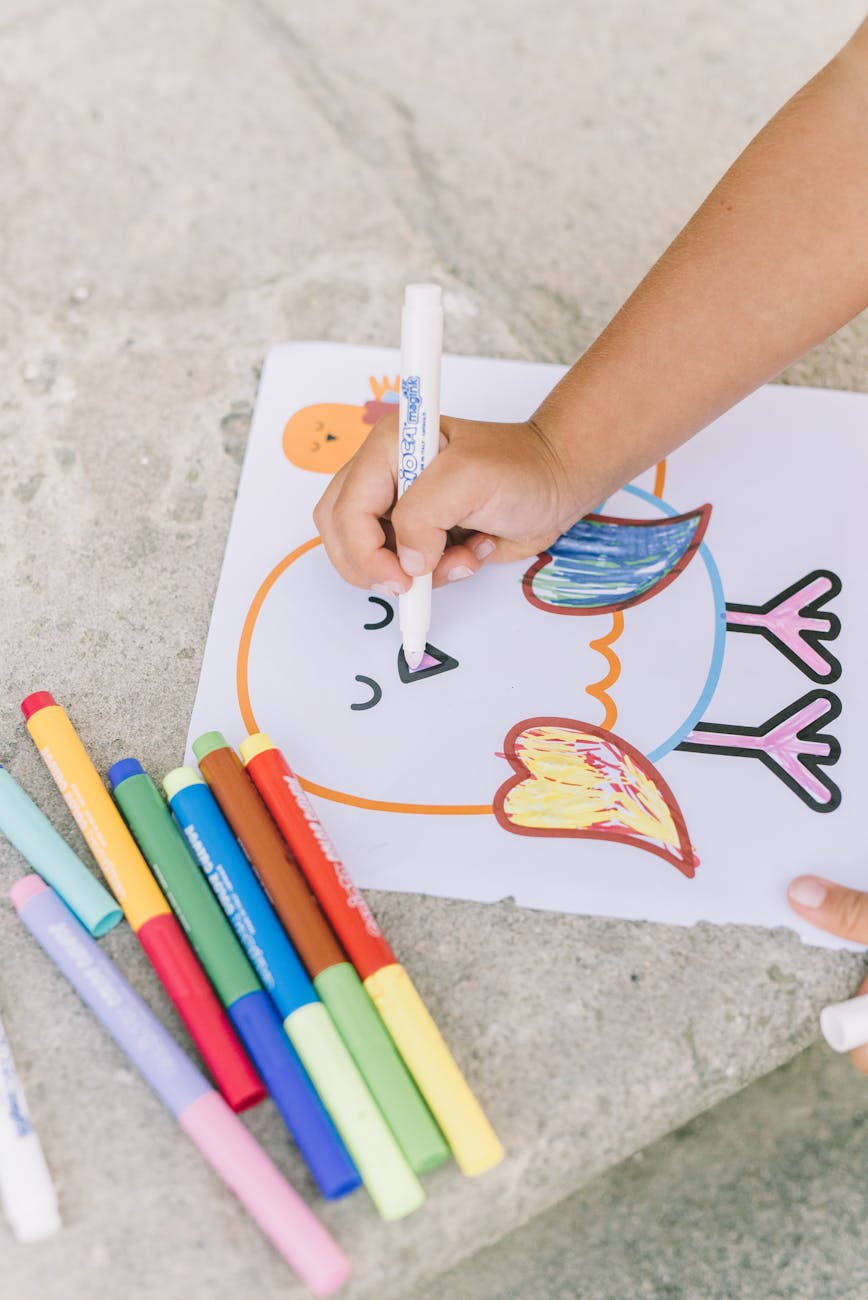
Take any topic from an Usborne Encyclopedia and get them to write a section of their own. They can create dictionaries with definitions, hand-drawn animal encyclopedias, or illustrated glossaries. For more ideas on how to harness interests for writing, visit How to Teach Writing in a Child-Directed Way.
Spelling
Kids can choose a topic, look up related definitions, and create a specialty vocabulary dictionary — which doubles as a spelling list. You can also play Bananagrams, Scrabble, Boggle, magnetic letter tiles on the fridge, hangman on a whiteboard, or any number of online games like Wordle. For more ideas on how to incorporate spelling via your child’s interests, check out How to Get Rid of the Spelling Program and Still Learn to Spell.
Reading
There are endless books on any topic. Make a weekly library date — your librarian is your new best friend. They know a little about everything and know where to find resources on everything too. And it’s all free. (Well, until you forget to return the books, which you will.) Here’s how we incorporated reading into our afternoons together. And also how I taught to read four different kids basic reading schools.
Math
You cannot get away from math. Even when I attempted unschooling for a time, I discovered the unavoidable truth: arithmetic is everywhere. Read more on how you can’t NOT do math naturally.
- Count ten cars or add green dinosaurs to brown dinosaurs for the littles.
- Tell me what percentage of British kings were married more than once.
- What is the speed of a walrus, a dolphin, or a porpoise?
- What is the actual distance from one planet to the next?
- How many ¼ cups in 1 cup? (Fractions and measurements, easily learned in the kitchen.)
- Build anything and you’ll discover the Pythagorean theorem. Eat at a restaurant and learn percentages while tipping.
Science
By far, the most interesting way to study science is to actually be a scientist.
- Get out in nature and draw the veins of a leaf.
- Learn to name birds and recognize their birdsong.
- Visit a geology museum to learn about your local rocks.
- Use science kits — chemistry, astronomy, biology — there’s something for every curiosity.
- Raise painted butterflies and baby chicks.
- Dissect owl pellets and crayfish.
- Enroll in informal science programs as they get older.
Here’s a discussion on how to do science and have fun.
History
Many books are written from a historical perspective, providing a rich narrative about a period — and are wonderful for read-aloud time too.
Add activities: geography and atlas study, events happening elsewhere in the world at the same time, a Book of Centuries journal, diaries of children from that historical moment, or a lapbook of everything learned.
If your kids are interested in Egypt, they might be interested in doing this. Or if you like art history like me, consider this.
2. Everyone Learns Differently
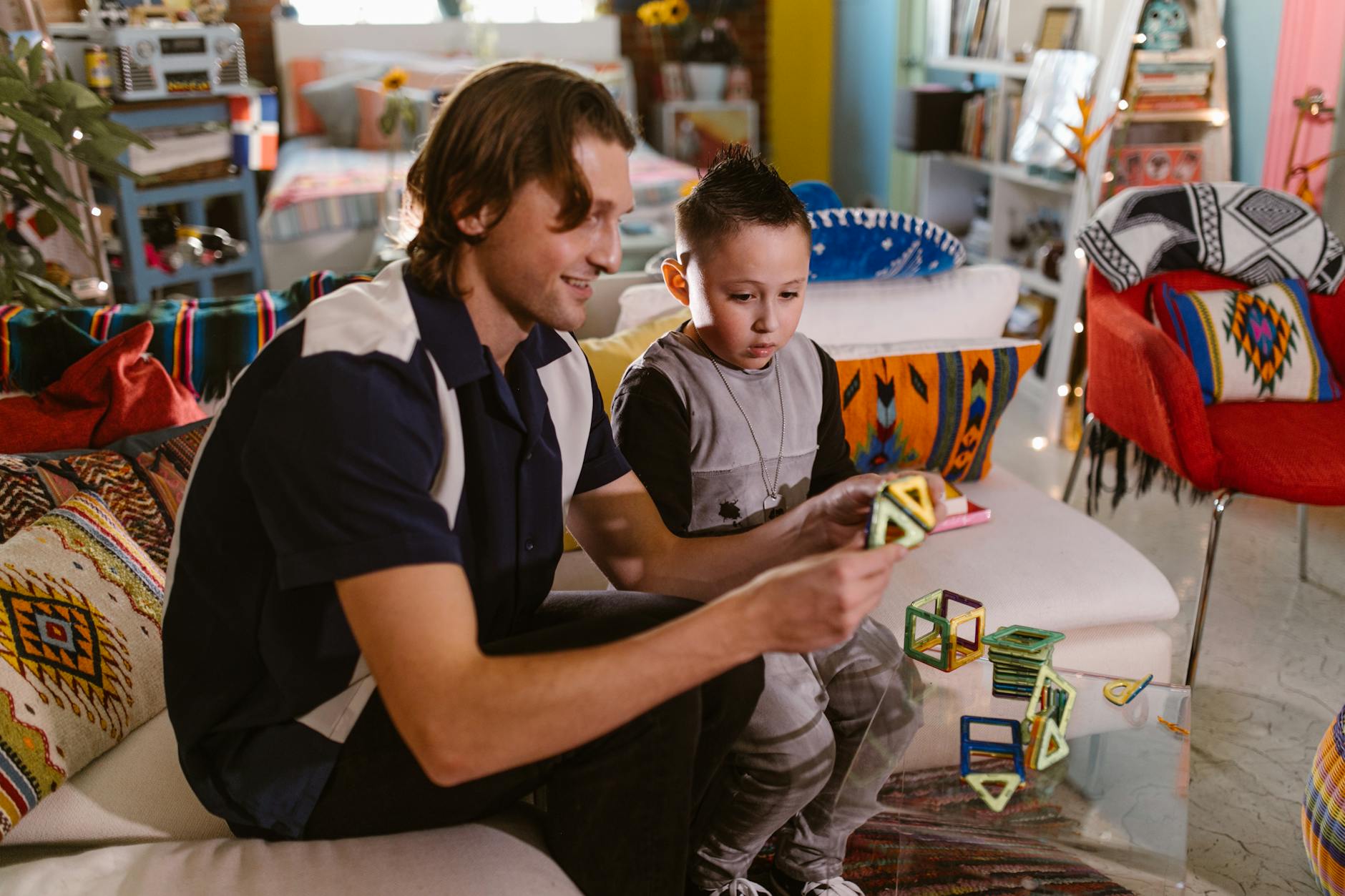
Two of my four kids were happy with a free-flowing, interest-led education. The other two preferred workbooks for an hour. And so be it.
Barbara Oakley, author of Learning How to Learn, reminds us that the brain works in two modes: focused and diffuse. Both matter. We don’t only learn by sitting down and concentrating. Sometimes the best learning happens in the shower, on a walk, or while building Lego.
In child-led learning in your homeschool, this means:
- Sometimes kids want to learn alongside siblings. Sometimes they don’t.
- Sometimes they want an online class or a community college course. Sometimes they don’t.
- Sometimes they like to read alone. Sometimes they want a video instead.
- Sometimes they learn best by doing — building, assembling, making, creating.
The goal is never to create alternative approaches for the sake of novelty. The goal is simply to follow the child.

3. Get to Know Your Child
Who are you educating? Who are you raising up?
- Learn what drives them — their enneagram type, their personality.
- Understand their introversion or extroversion.
- Notice whether they like to plan their days, or prefer to let things unfold.
- Pay attention to how they engage in relationships and how they recharge.
Get to know your specific child so that your specific child remains your focus. For a deeper dive into supporting independent learners, this post on Self-Directed Learning: the Art of Encouraging Independent Homeschooling is a good place to start.

4. Think Outside the Box: Beyond Textbooks, Lectures, and Lesson Plans
Here’s a question worth sitting with: which of the following are educational activities, and which are entertainment?
- Minecraft and Lego — games and toys, or skill-building activities?
- To Kill a Mockingbird, War and Peace, Diary of a Wimpy Kid, The Kite Runner — entertainment or education?
- A child lifting every leaf and rock by a pond, searching for snails — entertainment or field science?
- Watching a YouTube video on choosing marine animals for a fish tank?
- Counting coins while selling you a plastic cupcake for 75 cents in a pink kitchen?
- Taking a food safety course before starting a job at a local bakery?
No matter your homeschool philosophy or approach, I will always encourage you to lean into unschooling practices. Not because unschooling is the only way — but because it helps us release our grip on how we think a child’s education should look, and just let them learn.
“Children do not need to be made to learn about the world, or shown how. They want to, and they know how.” — John Holt, Teach Your Own
If you’d like to understand more about the philosophy behind this kind of education, 7 Freedom-Loving Ways John Taylor Gatto Informs Your Homeschool is well worth a read.
Ready to put this into practice? The hardest first step is often just seeing where school-minded thinking is still running the show in your homeschool — even when you don’t mean it to.
That’s exactly what the Deschool Your Homeschool Checklist is for. Run through it, be honest with yourself, and notice where a little letting go might open things right up.
Clear out the school-at-home mentality and make real room for child-led learning in your homeschool. This free checklist is your starting point.

Frequently Asked Questions About Child-Led Learning in Your Homeschool
What is child-led learning in a homeschool?
Child-led learning means structuring your homeschool around your child’s natural curiosities, interests, and preferred learning style rather than a fixed curriculum. It’s an approach that trusts children as capable, motivated learners when given the freedom to pursue what genuinely interests them.
How do I start child-led learning in my homeschool?
Start by observing what your child gravitates toward — books they pick up on their own, questions they ask, activities they return to again and again. Then find ways to connect those interests to traditional subject areas like writing, math, science, and history.
Can child-led learning cover all the core subjects?
Yes — almost any interest can be a vehicle for every subject, from math and writing to science and history. The key is learning to see curriculum in the things your child already loves rather than imposing a separate structure on top of it.
Is child-led learning the same as unschooling?
They’re closely related but not identical. Unschooling typically means no formal curriculum at all, while child-led learning can include structured elements that are chosen based on the child’s interests. Think of child-led learning as a spectrum, with full unschooling at one end and interest-led curriculum at the other.
What if my child only wants to do one thing all day?
Deep focus on one subject is often where the richest learning happens — and you’d be surprised how many other skills can be woven into a single passionate interest. Give it time before redirecting; the curiosity almost always broadens naturally.
What if my child wants a more structured approach?
Some kids genuinely thrive with workbooks, schedules, and predictable routines — and that’s completely valid. Child-led learning means following your actual child, not an ideology, so if structure is what they’re asking for, that’s the right answer for them.
Where to Go From Here
If the checklist opened something up for you, the Deschool Your Homeschool Journaling Workbook is where you go deeper. It’s a self-coaching tool built specifically for homeschool mamas who are ready to stop second-guessing and start building a homeschool that actually fits their family.

Deschool your Homeschool Journaling Workbook
The Deschool Your Homeschool Journaling Workbook is a self-coaching tool designed to help you redefine your homeschooling journey with clarity and confidence. Through thoughtful prompts and guided exercises, this workbook empowers you to:
People also ask:
- How to Teach Writing in a Child-Directed Way
- curiosity and education: how to facilitate it
- Self-Directed Learning: the Art of Encouraging Independent Homeschooling
- How to Do a Child-Led Education and Include your Children
- 7 Freedom-Loving Ways John Taylor Gatto Informs your Homeschool
- Child-Led Learning Benefits Your Kids (& You) Will Love
- Get your Deschool your Homeschool Journaling Workbook
- 11 Useful Guidelines to Spark Creativity for Homeschool Moms
- Do you share how I can get a charmed homeschool?
- Deschool your Homeschool Coaching Course
- Create a Love of Learning, No Matter your Children’s Learning Challenges
Get Unstuck in One Conversation
If you’ve read all of this and you’re still not sure where to start with your specific child, the Aligned Homeschool Reset call is your next step — it’s free, personal, and built for exactly this moment.

Teresa Wiedrick
I help overwhelmed homeschool mamas shed what’s not working in their homeschool & life, so they can show up authentically, purposefully, and confidently in their homeschool & life.
Subscribe to the Homeschool Mama Self-Care podcast
Call to Adventure by Kevin MacLeod
Link: https://incompetech.filmmusic.io/song/3470-call-to-adventure
License: http://creativecommons.org/licenses/by/4.0/

You are getting to the very heart of homeschooling. Well done! Strangely enough my oldest dds passion at 14/15 was English history which culminated in a speech on English kings and queens for Senior 4-H that resulted in first place in BC. My second dd was interested in all things medical. She ended up playing vet for the Yellowhead 4-H club in her teen years before becoming an RN.
Well isn’t THAT ironic. What will my third be interested in? I’ve got a lot to learn about this life (& my children), but it is so encouraging to hear your words, coming from a seasoned homeschooler of five!
Thanks ! nice post !
Yes! So true!!!
I love homeschooling for exactly this reason. 👏🏻