Podcast: Play in new window | Download
If you want to become a confident homeschool mom in year 1, this discussion is for you.
As a graduated homeschool mom who walks alongside other homeschool moms to help them shed what’s not working, so they can stop pushing through and instead meet their own needs, manage their stress, and set realistic expectations, these are the 9 steps to thrive and become a confident homeschool in year 1.
When you do you’ll become a more confident, competent, and happier homeschool mom.
Your new beginnings…
You are on your way to becoming a confident homeschool mom in Year 1…
Some homeschool moms I walk alongside are early in their homeschool journeys. Many of them are in preparation mode right now as they begin their first homeschool experience this upcoming autumn.
So, if that’s you, welcome!
If you want to be a confident homeschool mom in Year 1, here’s what I wish I had known when beginning my homeschool journey, and what I could have practically planned for, and would share in coaching with Sarah.
Who is Sarah, you ask? “Sarah” is a composite representation of a new homeschool mom who wanted to be a confident homeschool mom in Year 1.

When Sarah first entertained the idea of homeschooling her two children, she had a few concerns:
- Could she manage their education alongside her part-time job?
- Would they find a place to make friends or miss out on some cool school field trips?
- As she scrolled through endless Facebook groups, Instagram accounts, and Google searches, she stumbled upon a startling statistic: the number of homeschooled students in the United States had surged from 850,000 in 1999 to over 3.1 million in 2022, representing roughly 6% of school-age children (according to the National Home Education Research Institute).
Encouraged by the rather large (and quickly growing) community and the success stories of other homeschool families, Sarah decided to take the plunge.
Here’s how she—and me too—navigated the path to becoming a confident homeschool mom.
Step 1: Equip Yourself with Knowledge
Sarah’s Question: What are the legal requirements for homeschooling, and how do I prepare if someone comes knocking on my door?
You can find a specific discussion on your state or province here.
I remember spending countless hours researching, exploring different approaches, and trying to pick and choose the very best for my family.
It wasn’t until my third or fourth year that I resolved to do my homeschool in a way that served each of my kids (& me, because I no longer wanted to feel like I was a chicken with its head cut off).
But it wasn’t until around the 6-8th year that I confidently determined I was homeschooling in my unique way for my unique reasons. (And I no longer cared how other people were doing it).
It wasn’t till my 6-8th year that I genuinely knew I could do this homeschool thing because I learned to navigate the typical uncertainties, handled tough family moments, confidently answered the public’s FAQs, built a Burnout Prevention Plan and created a routine that supported individualized learning.
And if you don’t know already, I’m all about enabling you to become a confident homeschool mom in Year 1.

I know that if you have a guide to walk alongside you, you could gain that confidence and clarity a whole lot faster than I learned it: 8 years not required!
However, if you intend to do it independently, one of the first steps to gaining confidence in homeschooling is to educate yourself about these things:
- child development
- relationships, how to communicate, and how to listen to others
- how people learn
- what is an education anyway
- researching homeschool methods
- creating self-awareness practices
- learning to address your big emotions and incorporating self-compassion strategies
- oh and exploring curriculum options
Sarah began by researching her local regulations and connecting with local homeschool groups. She discovered that some areas have minimal requirements, while others demand detailed records and standardized testing.
Sarah learned the regulations and legislation where she lived and could discuss it with inquiring minds who want to know too: step 1 to a confident homeschool mom in Year 1.
Step 2: Create a support network
Sarah’s Question: How can I provide opportunities for social interaction for my kids when I don’t know anyone homeschooling? Where do I connect with other homeschool families and will they align with what I’m doing?
Disconnect and loneliness can be a challenge for homeschool moms IF they don’t create time for outside relationships and IF they only choose relationships with a fixed mindset.
Lessons I’ve learned about building a support network:
- Your support network doesn’t have to be homeschool families.
- It doesn’t have to be your family.
- It doesn’t have to be people that homeschool like you.
- Or even people that have the same worldview.
Data from the Coalition for Responsible Home Education indicates that 83% of homeschool families participate in co-ops, support groups, or religious organizations, which offer social opportunities for kids and parents.
Sarah joined a local co-op where she met other parents who shared resources, organized field trips and encouraged each other in bits of conversation they could have in the parking lot after their co-op, then she invited a few of those moms for coffee once a month, one of those moms became her weekly coffee partner, and one family became her trading kids partner.
NOTE: Remember what it was like when you were a new mom? Who did you hang out with then? Possibly that baby group where you sat in a circle and compared breastfeeding to bottle feeding, organic cotton sleepers to other stuff that seemed more affordable, and whether you’d hand make your baby food or buy those jars.
Those moms might not be your best friends as you continue in your mom journey, but you have to start somewhere.
ps Whether you find an in-person group or not, you’re always welcome to join the Confident Homeschool Mom Collective. I offer a special time dedicated to 1st-year homeschool parents, and you’ll also be able to kibitz with homeschool moms who have homeschooled a while. This is a surefire way to be a confident homeschool mom in Year 1.
Step 3: Develop a flexible routine
Sarah’s Question: How can I establish routines that balance homeschooling with volunteer work, time for me, and exercise?
A little straight talk? Balance will be a challenge. Presence is your goal.
Wherever you are, be there.
I don’t believe in balance as a mom. Mothering, homeschooling or otherwise, is a lot.
Saturated like a dry sponge just dropped into a pail of cooking oil. It’s like that.
Because of the possible homeschool freedoms you can embrace, you could create a lot of margin around your activities which will help you feel more “balanced”.
And that is what we’re going after anyway, isn’t it? The feeling of being balanced.
Flexibility is one of the key advantages of homeschooling. But many don’t take it. I know it was challenging for me!
However, Sarah determined to establish a flexible yet consistent routine to help her children thrive, oh, and herself too.
She time audited and time blocked.
Sarah blocked out her time from the moment she woke up to the moment she determined to go to bed. She paid attention to when the kids were no longer paid attention and didn’t force-feed an education just because school’s 3 o’clock dismissal wasn’t out yet.
(This approach not only kept her children engaged but also allowed her to adapt when someone called to ask if she could pick up their child from school, when she had to make an emergency visit to check on an older relative, or when there was a flood in the basement.)
Step 4: Clarify your core family, homeschool & educational values…
Sarah’s Question: How do I find and choose a curriculum that fits my child’s learning style and educational needs and also isn’t crazy expensive?
Homeschooling isn’t just about education; it’s a lifestyle choice that should align with your core family values. If you clarify your values and create a vision statement, you’ll create a compass to guide you, which will always redirect you to whatever matters most.
1. Ask yourself why: WHY are you doing it?
2. Identify your family & educational values
- Gather your family together and have an open conversation about your core family values and the values you aspire to in your homeschool journey.
- Discuss the aspects of education, lifestyle, and relationships that matter most to each family member.
- What hasn’t worked in school and what do you hope to see in your homeschool?
3. Craft your Homeschool Vision Statement
- Based on your reflections and the values, create a homeschool vision statement.
- This statement should be a concise and inspiring declaration of your collective aspirations for your homeschooling journey.
- If you’re especially conscientious, you could include your preferred educational approach, family dynamic goals, and personal growth goals.
- Hang it up on the fridge.
Step 5: Build self-awareness practices to deal with your routine frustrations…
Sarah’s Question: How can I develop patience — because this isn’t my strong suit?
Said many homeschool moms…
For many years, I resisted personal growth, not because I was intentional about that, but because I wasn’t equipped to do it. Instead, I invested much of my emotional energy being frustrated with life circumstances not being as I wanted them to be and responded mostly out of fear, not responding to life circumstances with agency.
When we don’t like what’s happening to us, this is what we tend to do:
- we worry (thinking we’ll anticipate all the possibilities, which rarely happen),
- fuss with others (as though that conversation will influence our scenario),
- we get angry (as though attempting to control will shift the trajectory),
- we feel perpetually overwhelmed (because we’re trying to do all these things in the hamster wheel of our minds),
- feel like we’re losing our minds (because it is too much for us to hold),
- we get sick (because the body keeps the score and internalizes that emotion aka energy in motion),
- and we, therefore, feel inevitably unhappy.
Homeschool mom frustration resonates with many. Here are five quick thoughts to help you address frustration and overwhelm, and move toward growth:
- You can’t control people, not even your little people.
- Also, you can’t control yourself either. If you grow in understanding of yourself, you’ll find more helpful ways to approach your moments of frustration.
- You can only do what you know to do now. In the words of Maya Angelou, “Do the best you can until you know better. Then when you know better, do better.”
- Accept your (& your kids’) humanness: You aren’t perfect, you’re never going to be, you won’t mother perfectly, and your kids won’t kid perfectly either.
- Plan for your moments (or seasons) of frustration & overwhelm. Accept your human reality: frustration & overwhelm are part of this human journey.

To become a confident homeschool mom in Year 1: answer five questions to overcome overwhelm & frustration…
Grab your journal and ask yourself these questions to create a plan for handling overwhelm and frustration:
Question 1: How do you typically handle feelings of frustration and overwhelm?
Acknowledge Emotions as Signals: Recognize feelings of frustration and overwhelm are natural responses when stepping into a new homeschooling journey. Consider these emotions as signals to take a step back, reevaluate your approach, and make necessary adjustments.
Question 2: Are you breaking down your goals into manageable steps to address that frustration and overwhelm?
Break Down Goals: Instead of trying to tackle everything at once, break down your goals into smaller, manageable steps. This approach not only makes the process less overwhelming but also allows for a clearer focus toward incremental progress.
Question 3: How often do you practice self-compassionate self-talk, such as using morning affirmations, expressing gratitude, and reframing negative thoughts?
Practice Self-Compassion: Treat yourself with the same kindness and understanding you would offer to a friend. Remember that growth comes from facing difficulties and learning from them.
Question 4: Are you willing to let go of educational approaches or activities that aren’t working for your child or you, even though on paper (or on someone’s Instagram feed), they look amazing?
Cultivate Flexibility: Embrace the idea that growth and adapting are at the heart of the mothering journey. Flexibility allows us to pivot when things don’t go as planned and when we need to discover creative solutions that suit our child’s unique needs.
Question 5: In what ways do you celebrate small wins and achievements in your homeschooling journey? You need to celebrate regularly!
Celebrate Small Wins: Instead of fixating on what might not be going perfectly, celebrate the small wins and progress you and your children are making. Every breakthrough, no matter how modest, is a step toward growth and a testament to your dedication.
Remember, you can’t control everything, but you can choose how you respond and continue to learn and grow along the way.
Step 6: Lean into child-inspired learning
If you want your homeschool activities to matter to your kids, create a love of learning, and enable a customized education, lean into child-inspired learning.
There are concepts I want to impart to my kids or explore with my kids, no question.
But learning doesn’t necessarily happen because I said something out loud, or because I have the kids read through a passage, narrate a passage, do the math worksheet, complete the lab report, or watch the video.
Or even because I’m excited to share something with them.
There were some days, I expected them to be like little computers that could receive a daily upload. (I did this because it made me feel that their education was created & measured).
If I could do the work to research a topic, buy the book, plan the lesson, and teach it once, or twice, then reinforce it, the kids should learn, right?
Alas, with many kids and many years, I’ve learned that most learning does not happen that way. So how to facilitate child-inspired learning in your homeschool?
In my early homeschool years, I tried the classical approach, doing the readings, lectures, and reviewing or expecting my child to return their readings with narrations (aka homeschool mama testing), and I was utterly surprised, and often frustrated, that they couldn’t regurgitate what I’d taught.
Surely if I had done the work, and been creative and interesting, they would be able to regurgitate what I so eagerly wanted to share with them.
Rather, I learned these things:
- Kids can discuss their readings, they are much more likely to process and keep them stashed inside their brains.
- If they can narrate, or tell me back something, I am much more likely to hear them regurgitate that fact later. But not always.
- If we discuss it more than once, more than twice, it’s likely locked in. At least temporarily locked in.
- But if they are interested in a subject, their little brains are fully front(al) and present.
- There is no need to entice them to engage.
- Engagement comes naturally, and easily, and is so much more fun for me to encourage their learning and their experimenting.
- And obviously, this is so much more fun for them.
- Oh, the depths they can go if they are given time to pursue their interests.
I learned that child-inspired learning in your homeschool WORKS. It works! So naturally, I learned to bend in this direction.
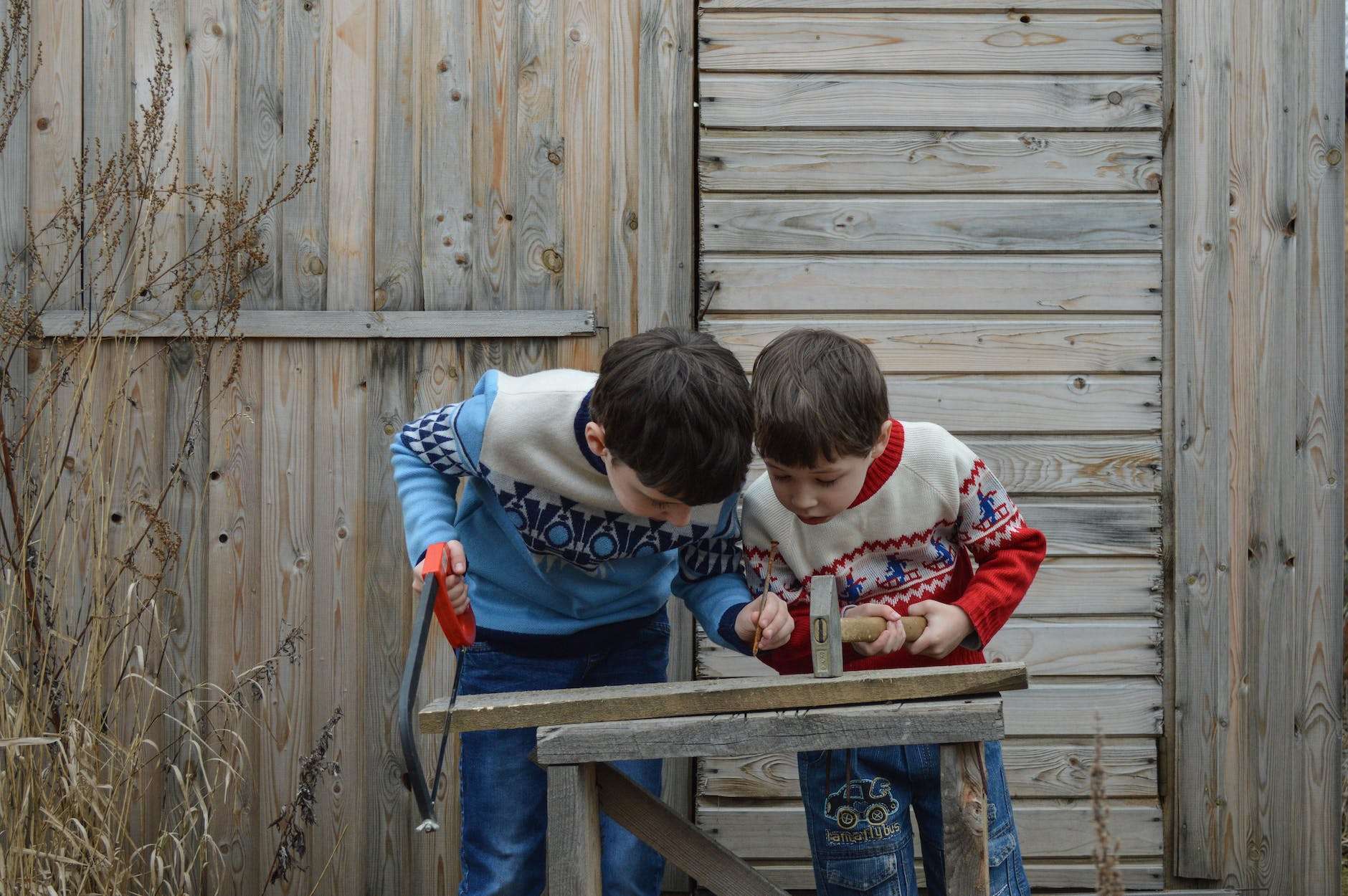
Here are a few steps to incorporate in your 1st Year…
1. How to incorporate your kids’ interests
- Pay attention to what your child is naturally curious about.
- Example: British history, zoology, or any other topic.
- Integrate Interests into Subjects:
- Writing: Have them write stories, reports, or even their own books on their favorite topics.
- Spelling: Create vocabulary lists based on their interests and make learning fun with games like Bananagrams, Scrabble, or online games like Wordle.
- Reading: Utilize the library and explore books related to their interests.
- Math: Apply math to real-life scenarios related to their interests, such as calculating distances, measuring ingredients, or understanding percentages.
- Science: Engage in hands-on activities, nature studies, or use science kits that align with their interests.
- History: Use historical fiction, documentaries, and activities to make history come alive.
2. Recognize their different learning styles
- Some kids prefer structured workbooks, while others thrive with a free-flowing, interest-led approach.
- Acknowledge both Focused and Diffuse Learning:
- Focused Mode: Structured study time with clear objectives.
- Diffuse Mode: Learning through everyday activities, play, and exploration.
3. Get to know your child
- Understand Their Personality: Learn about their MBTI and Enneagram personality type, introversion/extroversion, and how they prefer to organize their day. (When you join the Confident Homeschool Mom Collective, you should check out Enneagram 101, a workshop I offered the homeschool moms there).
- Learn more about family dynamics and how each person interacts.
4. Practice thinking outside the box
- Mix traditional educational materials with unconventional ones.
- Educational Games: Minecraft, Lego, and interactive online resources.
- Books and Media: Incorporate a wide range of books, both fiction and non-fiction, as well as educational videos and documentaries.
- Encourage Hands-On Learning: Allow children to explore and learn through real-life experiences, whether it’s investigating nature, building projects, or engaging in creative play.
- Join the Confident Homeschool Mom Collective and we’ll routinely discuss concepts that will help you think outside the box.
So what did Sarah do? She adjusted her approach based on what worked best for each child. She intentionally set aside “Fun Friday” to incorporate her child’s interests and she noticed when her kids were curious and allowed them to explore.
Step 7: Plan for relational reordering…
When everyone comes home to home educate, interpersonal relationship dynamics shift.
Even when a grown kiddo leaves home, the next child becomes the “oldest” child, until they all leave home. When a child develops an illness, dynamics change. If parents are having relational challenges, the dynamics change. If one child returns to school, but the others don’t, dynamics shift. When one child hits full steam of adolescence, dynamics change.
Interpersonal dynamics frequently change for various reasons.
Curiously, this work begins with you: leveling up relationships requires work of the interior, your interior. It isn’t other people that need to show up for you first; rather, it’s YOU that need to show up for you.
Inner work is required to build stronger relationships. And when you do show up for you, you’ll know how to address new and changing family dynamics more fluidly.
Though who you invite into your world matters, it is YOU that most deeply influences how you experience relationships, how satisfied you are in relationships, and how likely you’ll feel seen, heard, and accepted too.
Your relating to yourself is the most important thing.

If you want to preplan for that relational reordering, consider this…
1. Understand the importance of relationships.
We all need comfort and empathy during tough times. Sharing life is more enjoyable together. Feeling connected is essential for happiness. Interacting with others helps us learn and grow.
2. Focus on your inner work.
Show up for yourself first: I know I have a story of coming back to me and learning to show up for myself at all. (I’ve been giving you monthly snippets of my story in the Confident Homeschool Mom Collective).
Unquestionably, my understanding of my world shifted dramatically when I came to understand that I wasn’t seeing, hearing, or honouring myself at all. And in one fell swoop, or in one key summer, everything I’d ever understood about myself, about others, including about the One that created me, shattered. I had to look, for the first time, at who I am, what I value, why I’m here, and how I haven’t been showing up for myself at all.
When we focus on showing up for ourselves first, we begin to build a sense of self. And who THAT person is can then now relate to others with integrity and alignment.
Your self-awareness and well-being are key to building strong relationships.
Self-reflection: take time to understand your needs, boundaries, and desires. Use the Build Your Boundaries Journaling Workbook to do that.

Build Boundaries in Your Homeschool (& Life) Journaling Workbook
Build Boundaries in Your Homeschool (& Life) Journaling Workbook
3. Work to build strong relationships outside your home too.
Connect with other moms at co-ops or community groups. Strengthen your relationship through communication and shared activities. Foster better relationships with parents and siblings. All your relationships intersect and impact one another.
4. Clarify your healthy boundary intentions.
Recognize when someone oversteps: build awareness and identify when others are overstepping your boundaries. Express your needs and preferences openly. If you don’t feel you are able, ask yourself why. Say ‘no’ when necessary and allocate personal time.
Manage demands and expectations from family and homeschooling activities. Spend time on what truly matters to you and your family.
5. Here are a few practical steps for boundaries.
Ensure you have personal space and time away from homeschool responsibilities. Build a plan to address and resolve conflicts with your partner and family members. Don’t hesitate to ask for help from those close to you.
Consider reading further on this discussion.
To become a confident homeschool mom in Year 1, Sarah grabbed her Build Your Boundaries Journaling Workbook and answered two journal prompts each morning. When she got frustrated during the year, she joined us in the Roundtable conversations in the Confident Homeschool Mom Collective.
Step 8: Tackle your unrealistic expectations…
Sarah’s Question: How do I homeschool more than one child at different grade levels and get their individual needs met? (And how do I do this with an 8-month-old baby?) I know I can be a bit unrealistic, but any chance you’ve got a formula?
In a nutshell? Nope, no formula.
The hope to make that scenario happen is a great expectation. That scenario will be met “messily”.
I don’t believe in grade-level learning. The school system does. I don’t. And I genuinely don’t believe you need to.
That scenario right there is an unrealistic expectation. And if you want to be a confident homeschool mom in Year 1: be realistic.
ps that statement right there is an unrealistic expectation.
However, we’re homeschool mamas! We have lofty ambitions. For our kids, for their educations, and for ourselves.
So how to manage unrealistic expectations in our homeschool?
Know that you can’t do everything.
Really, you can’t. No one is doing it all. Accept that you’re a human being who can only handle so much, and that’s perfectly okay!
How to practice being realistic?
Time block: track everything you do for a week.
You’ll see there’s not enough time for ALL.The.Things. Prioritize what’s most important and let go of the rest.
Other unrealistic expectations…
Some days will feel hijacked: you don’t have a choice but to accept it.
Everyone won’t always get along. Kids will bicker, plans will get disrupted, and some days your homeschool will feel hijacked.
How to handle hijacked days:
Use tools like a journaling workbook to address and manage your big emotions. Have a plan for dealing with those challenging days.
What Sarah did? Leaned into reality (& tried to harness her inner Teresa: some days will feel hijacked, these days are important learning opportunities too”. Over the year, she was more idealistic than she initially understood, but since she was reminded that this would be her 1st year discovery, she wasn’t intimidated and grew in confidence that she was normal, her kids were normal, and unrealistic expectations didn’t have to take her down.
Step 9: Adopt a growth mindset…
If you want to make things easier, ask yourself, “How do I overcome uncertainty and build confidence in my ability to educate my child (especially when everyone around me is questioning me)?
As a homeschool mom, you are responsible for your children’s education and also their emotional and social development. That task can appear daunting, as we all recognize the gravitas.
And yet, when we discover that this mothering thing can’t be engaged flawlessly, when we learn there is no such thing as mothering perfectly, because we aren’t perfect or flawless, then we discover we have a giant responsibility on our hands that could feel plenty overwhelming or it could feel freeing.
And if we want to feel freer, we must do the internal work and choose to grow ourselves up.

5 ways to incorporate personal growth practices in your 1st homeschool year…
1. Learn Family Systems Theory
Understanding the dynamics of your family can significantly enhance your family experience. Dive into the eight core concepts of Family Systems Theory by Murray Bowen:
- Differentiation of Self: Maintain individuality while fostering healthy family relationships.
- Triangulation: Recognize how conflicts often involve three people and how this affects family dynamics.
- Nuclear Family Emotional System: Identify emotional patterns within your family of origin.
- Family Projection Process: Understand how your emotional issues can impact your children.
- Multigenerational Transmission Process: See how emotional issues are passed through generations.
- Emotional Cutoff: Learn the implications of distancing yourself emotionally or physically from family.
- Sibling Position: Explore how birth order shapes personality and behavior.
- Societal Emotional Process: Assess how societal influences affect your family.
2. Build a practical plan to develop emotional self-regulation and intelligence.
- Pay attention to your emotions & notice your internal narrative and its impact on your day.
- Connect with others who understand and support your emotional journey.
- Avoid self-shaming and encourage self-compassion.
- Listen to feedback from loved ones and reflect on your behaviors.
3. Bolster boundaries and healthier communication
Setting boundaries and practicing healthy communication are vital for personal growth and effective homeschooling:
- Define what is acceptable and what isn’t, for both yourself and others.
- Engage in honest conversations with your family about your needs and expectations.
- Acknowledge and prioritize your personal time and activities.
4. Take responsibility for your actions and decisions
- Regularly evaluate and adapt your homeschooling strategies.
- Utilize therapy or life coaching to explore how you can take responsibility in a healthy, non-shaming way. Book a no-obligation conversation with me to create your individualized ACTION plan.
5. Nurture the parent-child relationship
Connection and relationship with your kids are the most important elements of your homeschool family.
- Recognize that not all relationships will be comfortable, but they offer growth opportunities.
- Spend eyeball-to-eyeball time with your children, acknowledging their feelings as they arise.
- Maintain your sense of self while being actively involved in your children’s lives.
Even if you begin to incorporate just one of these personal growth practices in your first homeschool year, you will fast-track your sense of ease in your homeschool mom life. Oh, and you’ll be actively creating your Burnout Prevention Plan.
Confident Homeschool Mom in Year 1…
In her first homeschool year, Sarah learned to become a confident homeschool mom by following nine practical steps.
- She equipped herself with knowledge about homeschooling laws and best practices.
- Built a support network with other homeschool families.
- Developed a flexible routine that balanced homeschooling with personal time.
- She clarified her family’s core values and created a vision statement.
- She practiced self-awareness to manage frustrations.
- She embraced child-inspired learning.
- Sarah planned for changes in family dynamics.
- She set realistic expectations.
- She adopted a growth mindset to overcome uncertainties and build confidence.
Becoming a confident homeschool mom is a journey that involves a willingness to continuously learn, instill growth practices, and incorporate an authentic, supportive community.
Reimagine your Homeschool Workbook
Introducing the Reimagine Your Homeschool Workbook! Reflect on the past year, assess what worked and what didn’t, and build the homeschool you truly want. Evaluate curriculum, routine, philosophy, and plan for the future. Get renewed inspiration and fresh ideas.
People also ask:
- Encouragement for New Homeschoolers
- 9 Common Mistakes That Can Make Your 1st Homeschool Year Stressful (& How to Avoid Them)
- Overcoming Imposter Syndrome: How to Build Confidence as a Homeschool Mom
- Get Help with your 2024 New Homeschool Year Planning
- Can I Homeschool My Child? From Doubt to Confidence
- Empowering Newbies: Homeschool Mama Self-Care Podcast
- Can I Homeschool in Canada? Your Ultimate Guide to Support & Resources
- Start Homeschooling in British Columbia: How to Decide

Teresa Wiedrick
I help overwhelmed homeschool mamas shed what’s not working in their homeschool & life, so they can show up authentically, purposefully, and confidently in their homeschool & life.
Subscribe to the Homeschool Mama Self-Care podcast
Call to Adventure by Kevin MacLeod
Link: https://incompetech.filmmusic.io/song/3470-call-to-adventure
License: http://creativecommons.org/licenses/by/4.0/
